
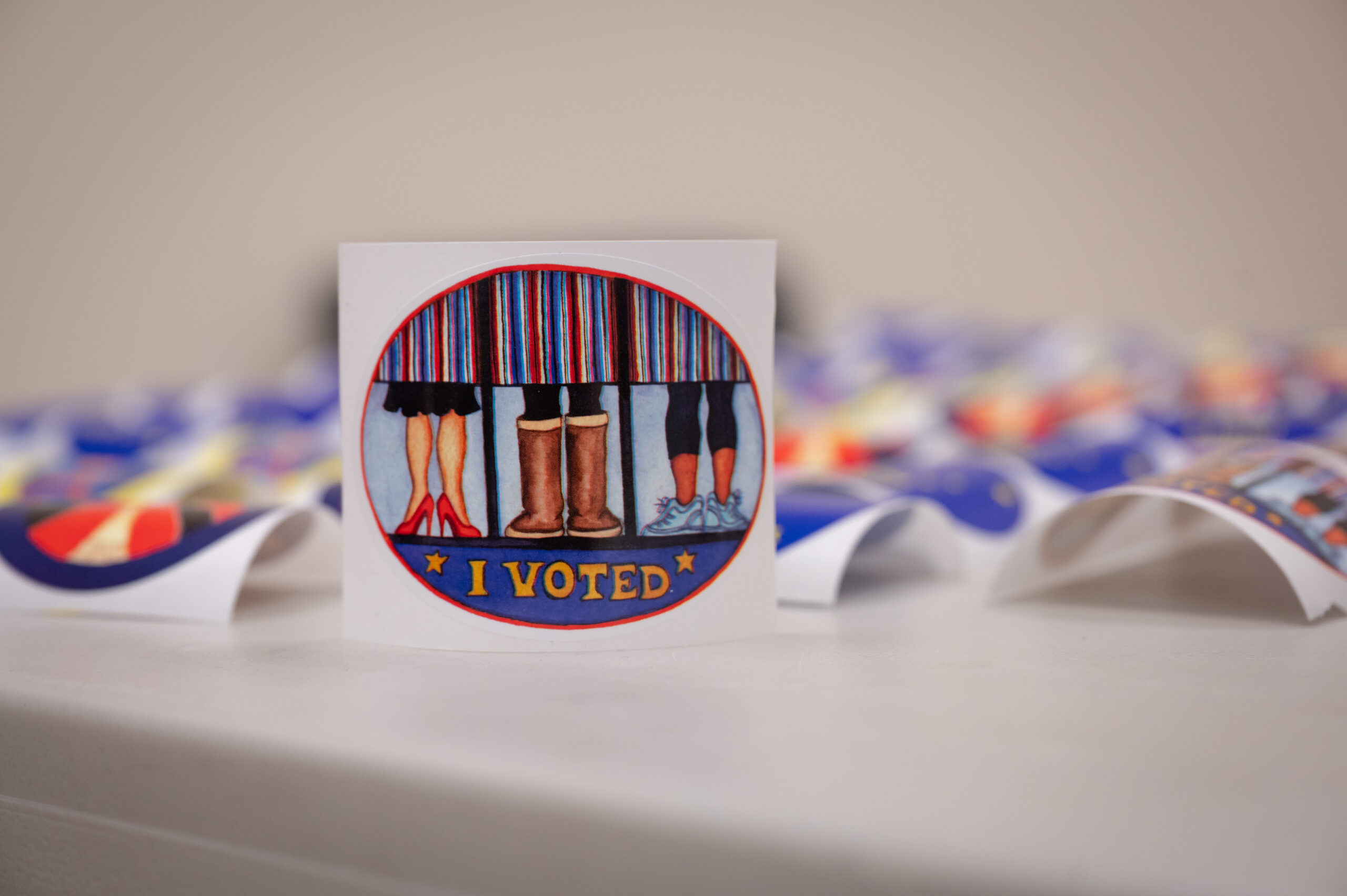
Alaskans have until 8 p.m. on Tuesday, Aug. 18 to vote in this year’s primary election.
Read more Be Among the First to See PBS Mystery Premieres in Wasilla
Here’s what you need to know:
What races are on the ballot?
This year, Alaskans will vote for governor, U.S. Representative, U.S. Senator, all state House seats and half of the state Senate.
It’s an open primary, meaning it’s not segregated by political party. All candidates appear on the same ballot.
Is there also a ballot proposition I should know about?
Yes. Ballot Measure 1 would limit how much people can donate to political campaigns.
Alaska has allowed individuals to make unlimited contributions to candidates since 2021, when a court struck down the state’s $500 contribution limit as too low.
If Ballot Measure 1 passes, it would cap an individual’s donations at $2,000 to a candidate each election cycle. That amount would be adjusted for inflation once a decade.
You can read more about the ballot measure here.
Tell me about the statewide candidates.
It’s a crowded ballot with 17 candidates for governor, 15 candidates for Alaska’s lone U.S. House seat and 16 candidates for U.S. Senate. Incumbent U.S. Sen. Dan S. Sullivan is running for reelection, as is Congressman Nick Begich. Gov. Mike Dunleavy is term-limited and not on the ballot.
Will I be ranking candidates?
Not on the primary ballot. In the primary, voters will only choose one candidate in each race. The top four candidates in each contest will advance to the general election, set for Nov. 3.
In the general election, voters will have the opportunity to rank candidates.
What are the most important legislative races on the ballot?
Most have four candidates or fewer, meaning all of them would advance to the general election. Only five races will narrow after the primary:
- Rep. Jamie Allard, R-Eagle River, faces four challengers for her seat: Republicans Nick Capozzi and Ruby Jones and Democrats Lee Hammermeister and Jim Arlington.
- Rep. Garret Nelson, R-Sutton, was appointed to fill a vacancy and is running for a full term to represent the eastern half of the Mat-Su and Valdez. His five challengers are Republican Steve Menard, nonpartisan Jessica Kusner-Kalarchik and Libertarian Candice Frisby, all of Palmer; Democrat Kimberly Slone and undeclared candidate Amber Hansen, both of Wasilla.
- Rep. Kevin McCabe, R-Big Lake, faces four challengers in his bid to continue to represent the rural western half of the Matanuska-Susitna Borough. They are Talkeetna Democrat Sandra Loomis, Big Lake Republican Mike Alexander, Wasilla Republican Doug Massie and Willow Republican Doyle Holmes.
- Rep. Bryce Edgmon, I-Dillingham, is running for state Senate. Seven candidates are vying to represent his sprawling Southwest Alaska district, which includes Bristol Bay, the Aleutian Islands and the middle Kuskokwim.
- Five candidates are seeking to replace retiring Sen. Lyman Hoffman, D-Bethel. The district covers a large swath of Western Alaska, from the Yukon-Kuskokwim Delta to the Alaska Peninsula and Aleutian Islands.
You can find a sample ballot for each House district at the Alaska Division of Elections’ website. Ballots are available in English and, for some districts, in other languages, including Chevak Cup´ik, Filipino (Tagalog), Northern Inupiaq, Nunivak Cup’ig and six dialects of Yup’ik.
How do I figure out who to vote for?
Check out our 2026 Primary Election Voter Guide! Alaska Public Media — in partnership with the Alaska Beacon, the Anchorage Daily News and KTOO — sent all 53 candidates running in the primary a questionnaire, with many questions coming from readers.
Read more Feds take back management of Kuskokwim River salmon with emergency coho closure
Most candidates, though not all of them, participated.
Where and when can I vote?
Early voting is already underway. On primary day — Tuesday, Aug. 18 — polling places will be open from 7 a.m. to 8 p.m. Voters needed to have registered to vote a month ago.
If you’re not sure where your polling place is or whether you’re registered, you can check the My Voter Portal on the Division of Elections website.
Voters need to bring a valid form of identification to the polling place. That can be a driver’s license or state ID card, a military ID, a voter registration card, a hunting or fishing license or a birth certificate. It can also be a utility bill, government check, bank statement, paycheck or another government document that includes the voter’s name and current address, according to the Division of Elections.
For those voting absentee, the ballot must be postmarked by Aug. 18 to be counted. Not all mail receives a postmark. The division recommends you go to a post office and have a postal clerk mark a postage stamp with an ink hand-stamp at the counter to ensure it was submitted on time.
What if I’m sure I’m registered to vote but the Division of Elections doesn’t have me on the list at the polling place I go to?
Voters can request to fill out a questioned ballot at a polling place. The ballot is verified separately from standard ballots by bipartisan review boards who verify voter eligibility and prepare them for scanning and tabulation.
When will we know the results?
Division of Elections officials expect to release the first results between 8:45 p.m. and 9 p.m. Tuesday. They will include votes cast at polling places on Election Day and early votes cast between Aug. 3 and Aug. 13.
“Early votes cast five days before Election Day are sequestered to ensure no duplicate voting has occurred,” division officials said.
The division plans to post on social media and notify news outlets when each additional batch of results is released.
The division’s target date for the election to be certified by a state elections review board is Aug. 31.
Read more Trump administration ends NOAA support for annual Arctic Report Card