
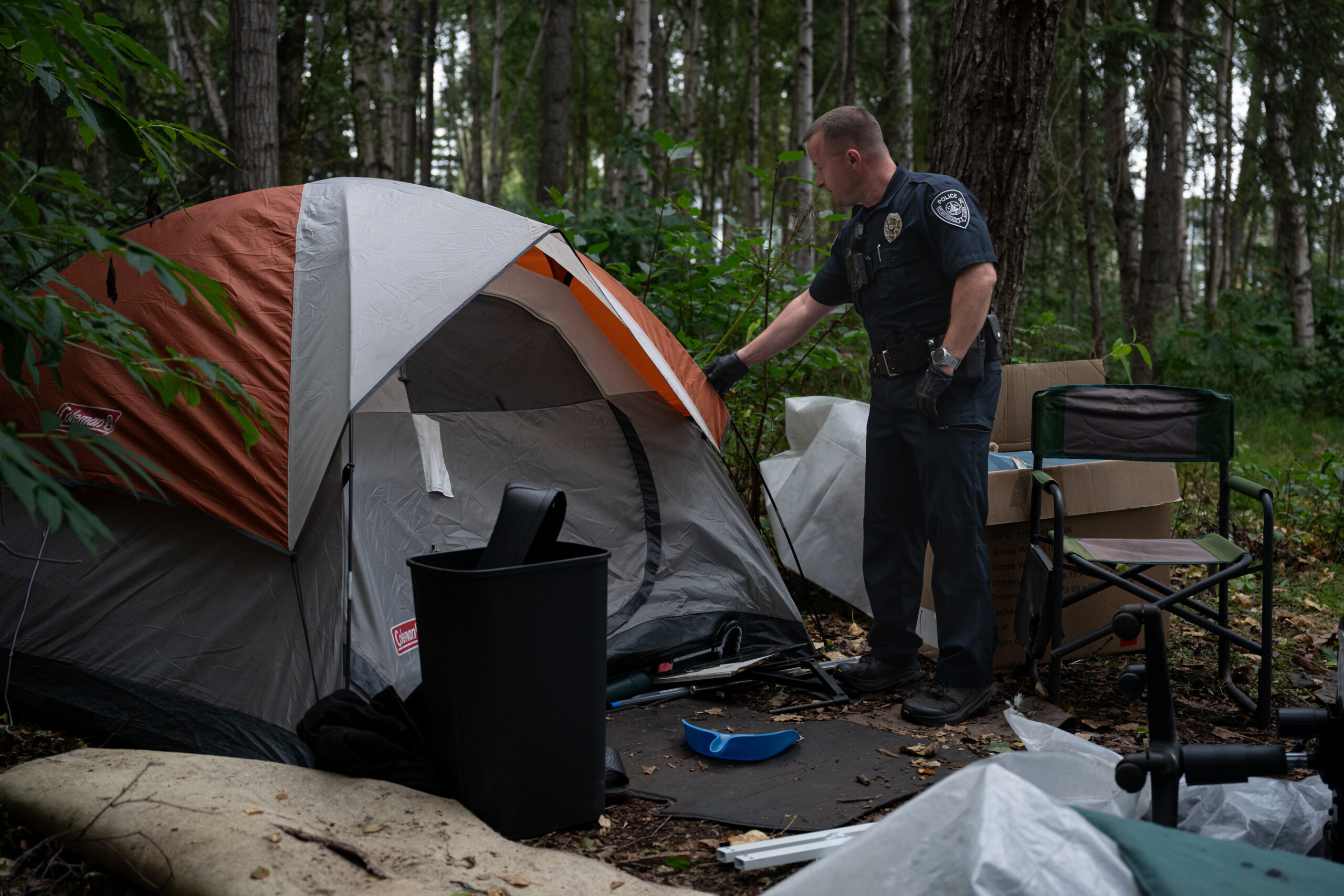
More than a year after the Anchorage Assembly voted to criminalize camping in specific zones of the city, Anchorage Police Chief Sean Case said the law is functioning well as part of a bigger strategy to address homelessness.
Read more Nome miners sue Sitnasuak Native Corporation, state troopers over beach access dispute
The law criminalizes camping in certain high-priority areas, like near schools, playgrounds, on trails or on the edge of high speed roads.
City officials delivered a one-year report on the issue Wednesday at a Housing and Homeless Committee meeting. Case said the law allows officers to respond quickly to reports of camping, which keeps encampments from becoming entrenched.
He said the law also works as a tool for outreach.
“When you have a legal reason to contact people, that opens up the gateway to be able to contact them and offer them resources,” he said.
Under the law, police can clear homeless camps immediately, without warning. Those who don’t comply can be fined up to $500 or even do jail time. It’s a major shift. Before, the city was mostly limited to a civil process called abatement, which generally gave campers 10 days to leave.
Case says most of the time, officers don’t arrest people who are sleeping in illegal areas. Of the more than one thousand people officers interacted with since the department began enforcement last September, 89% voluntarily complied and moved on.
Case said he’s heard the complaint that they’re just moving homeless people around the city. But a key piece of the strategy is the interaction between unhoused people and officers or other outreach workers, he said. Some people – 7.5% – opt for a referral to care, like shelter, addiction treatment or healthcare.
Services like shelter beds and behavioral health care aren’t always available though. Shelters are often full, even in the summer, and last winter shelters were turning people away most nights. According to some people on the front lines of homeless outreach, that made it excruciating for people to live outside during last winter’s sub-zero temperatures.
Jessica Parks, with the Anchorage Coalition to End Homelessness, said people were forced to focus on survival.
Read more Federal government officially files to rescind the Roadless Rule
“Not even just the day, but the hour. ‘What do I need to do to get through the next hour and then the next hour after that and the next hour after that?’” she said.
In those circumstances, it’s hard for people to think about things like applying for food stamps, getting on housing lists, or even keeping track of their belongings, she said.
But Lt. Brian Fuchs, with the police department, said if a person wants help, his team and their outreach partners will do everything they can to connect them to services.
“We never walk away from a person,” he said.
And Case said repeated interactions with officers and outreach workers build trust.
“The seventh or eighth time, when you’ve had repeated contact with them, you’ve established that you care, you’ve established that you’re trying to help them out, the more likely they’re going to go, ‘Tell me what you got for me,’” he said.
When people don’t want to move on or accept referrals, officers can arrest and charge them. As of late July, 109 cases had been forwarded to the city prosecutor’s office. More than half are still pending and there have been six convictions, with one on appeal.
In enforcing the camping law, Case said officers have also found dozens of people with unrelated outstanding warrants.
Read more Trump announces plans to fill Alaska’s third federal judge position, vacant for over two years