
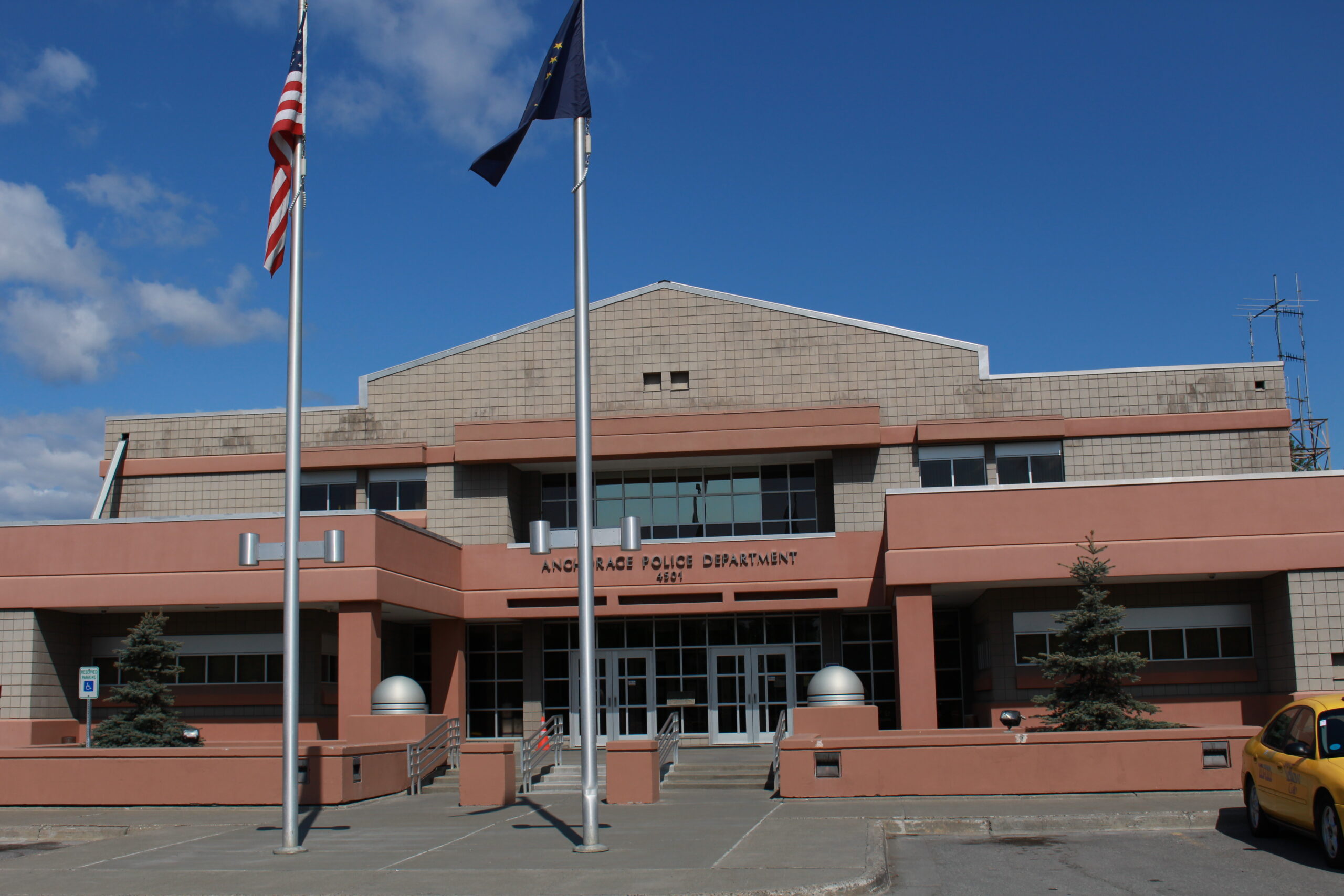
The Anchorage Assembly is considering spending more than half a million dollars on an ongoing project to build what police officials call a “real-time crime center.” That’s where officers can access a wide variety of technology, including license plate readers and video from traffic cameras and drones.
Read more SEARHC opens new compounding pharmacy in Mendenhall Valley after years without one
The city’s police chief says it will help address crime. But some Assembly members want to ensure the public’s privacy is protected first.
The Assembly will take up the roughly $600,000 contract with the tech company ThunderCat next month to install and provide support for new equipment at the Anchorage Police Department Real-Time Crime Center, at its station on Elmore Road in East Anchorage.
The funding would mostly come from a tax levy voters approved in 2021 for police technology upgrades. That tax also paid for putting body cameras on officers.
“The Real-Time Crime Center is going to be a separate entity from dispatch,” Anchorage Police Chief Sean Case said at an Assembly meeting on Aug. 4. “And so what they’re going to use is once a call comes into dispatch center, then they’re going to utilize these resources to help officers to respond to the call.”
Crime center staff would be able to connect to as many as 750 cameras. That includes the more than 250 traffic cameras around the city, as well as officer-worn cameras and private security cameras that owners have given police access to. It also includes cameras on new drones that center staff can deploy.
All of that caused some concern for South Anchorage Assembly member Keith McCormick, who wants to know how video and other information the system captures will be used and stored.
“When my constituents ask, ‘What are we collecting? Who can see it? How long do we keep it?’ Anchorage code can’t answer any of those questions,” he said. “We have no legislative guardrails.”
McCormick, along with Assembly vice chair Daniel Volland and North Anchorage Assembly member Sydney Scout, introduced an ordinance that would codify policies and procedures for the access and storage of information captured by the new surveillance upgrades.
Scout admits she wouldn’t have approved the Real-Time Crime Center if she had been on the Assembly when it was first voted on. But with more surveillance in Anchorage, she said there needs to be appropriate city code to regulate it.
Read more Charter plane crashes in Southwest Alaska with multiple people aboard
“It’s very clear that we have a right to privacy that shall not be infringed in Alaska,” Scout said. “So we’re both trying to get ahead of future concerns and trying to enshrine the existing rights and civil liberties that we have in Alaska into this new system.”
The new ordinance would require footage captured by cameras to be deleted after two weeks, unless it‘s being used for an active investigation. It would also limit how license plate readers would be used, Scout said.
“What we’re proposing in our policy around license plate reader technology is that it is really only used for traffic enforcement and for justifiable tracking reasons like missing kids or stolen vehicles,” she said.
It would also require that data not be shared with federal agencies, like the Department of Homeland Security, without a warrant and that the crime center’s use of A.I. be approved by the Assembly.
Scout said several policies in the ordinance, including the limit for how long camera footage is stored, are already current police department practices. But those practices are at the discretion of the chief, and Scout said she wants to make sure they would extend to future administrations.
“We want to do things right,” Scout said. “Let’s put this into code now, so that when power changes, when the political winds shift, as they always do, we have protections for the people, no matter who is overseeing and implementing the system.”
The Assembly is set to take up funding for the Real-Time Crime Center and the privacy ordinance at its next meeting on Sept. 1st.
The Assembly is holding a worksession on the crime center funding on Friday, Aug. 21.
Read more Evacuation orders for Tok wildfire reduced with arrival of cooler weather