
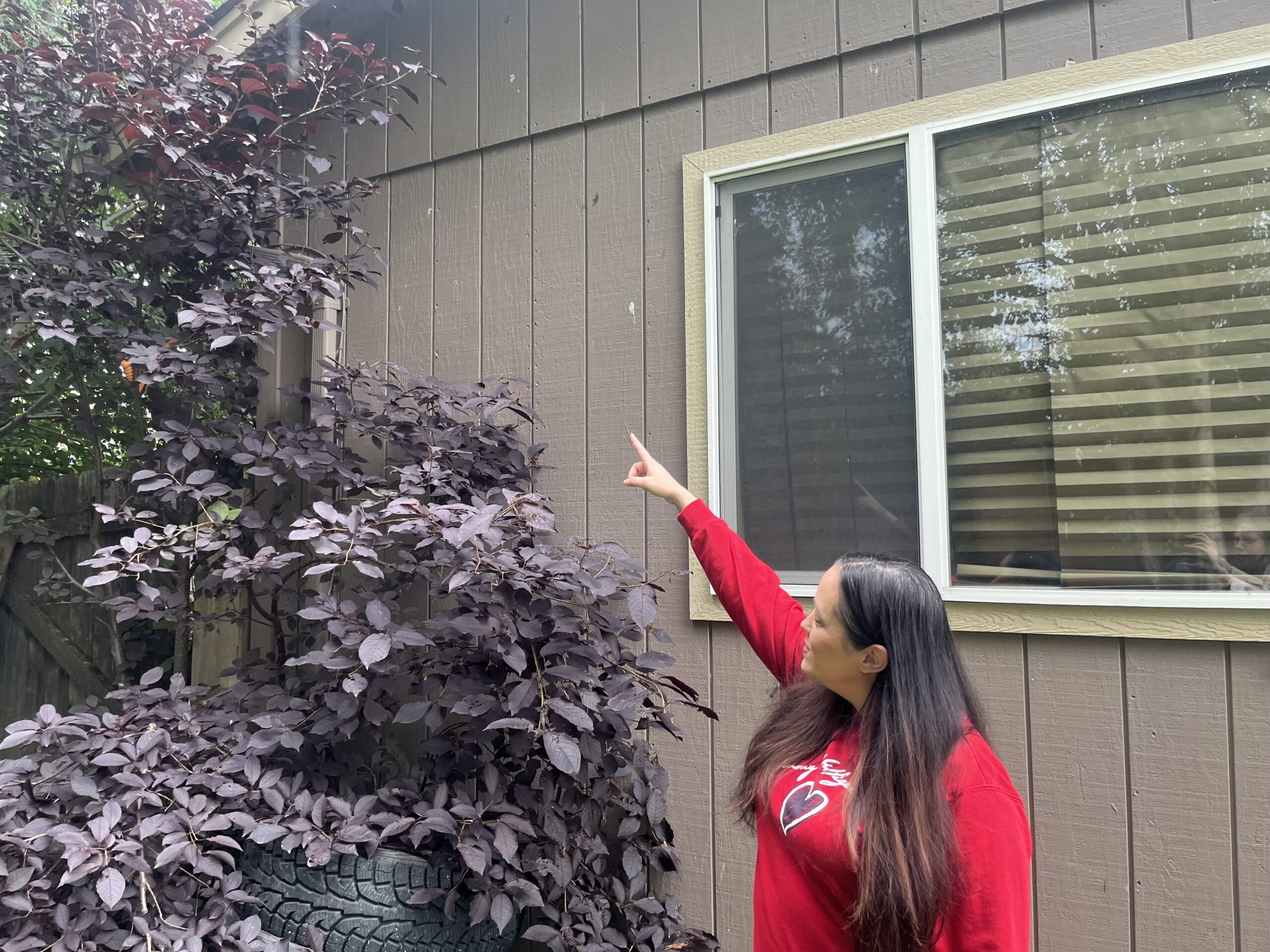
On a hot day in late July, Jessie Rice and three of her kids were in the back yard of their South Anchorage home.
Read more Alaska Supreme Court to rule on question of bias in ballot measure language
“I set up a little pool for them, and then we just got swarmed with wasps,” she said.
They ran for the house. No one was stung, Rice said, but a few days later, she was pulling a raft out of her shed and wasps swarmed her again. That time, she got stung three times.
The raft stayed in the yard where she dropped it, unused.
“I don’t know why there’s so many this year,” she said. “It’s just crazy.”
Rice said in the more than 40 years she’s lived in Anchorage, she’s never had to deal with wasps like this. Her neighbors, friends and her fiance are all talking about what a big wasp year it is, she said. And in Anchorage and the Mat-Su, pest control companies report getting a lot more calls than usual.
But it’s hard to know what’s actually going on with the numbers. That’s true for the name too. Some people call them wasps, some insist they’re yellowjackets.
According to Alex Wenninger, an entomologist with the University of Alaska Fairbanks, both names are correct. “Wasp” is a general category. The specific kind of wasp that builds papery nests and stings people in Alaska are yellowjackets.
There’s no funding to keep track of yellowjacket numbers in Alaska, Wenninger said. Instead, she’s found a workaround. She tracks populations using a platform called iNaturalist, which is a sort of social network for people interested in sharing flora and fauna. She records wasp and yellowjacket mentions in Alaska, accounting for various factors.
“From what I’ve seen, we don’t have evidence to support that there are more of them this year,” Wenninger said. “And so the default is that there isn’t a change unless we can show that there is a change.”
Wenninger acknowledged it’s not a foolproof way to gauge the population, but she said her personal experience is in line with the flat numbers: She hasn’t seen more yellowjackets than usual.
Call around to pest removal companies, and you hear a different story. Take Randy Beuter, with Eagle Pest Control.
“I’ve been in the business for 24 years, and we’ve seen levels like this twice,” he said. “Ten years ago and now.”
Read more Schools in Kipnuk and Kwigillingok won’t open this year, school district says
Beuter said he’s been booked all summer, and it’s not just one or two nests per house. The other day, he removed seven from one home on the Anchorage Hillside, he said.
“They were just completely around the house, and they were all about the size of a volleyball,” he said.
Wayne Olszak owns Kicking Ant’s Pest Control. He’s getting about four times as many calls about yellowjackets as usual, he said.
“It happens every couple of years,” he said. “It’s in a cycle.”
In his experience, Olszak said, it’s related to this spring’s weather. The yellowjacket queens overwinter and then come out during the first warm spell of the year. If there’s a cold snap after that, it will kill off some of those queens. But this year, he said, a late spring went straight into summer and probably, most of the queens survived.
Olszak has some advice for folks.
“I wouldn’t recommend trying to handle them yourself if you don’t like getting stung,” he said.
But Jessie Rice did handle them herself. She managed to grab the last cans of insecticide spray at the store.
Still, she said she and her kids haven’t used the back yard since that day with the kiddie pool.
“I don’t even want to go back out here and play,” she said. “We’ll go to the trampoline park or something where there’s no wasps.”
She can’t wait for the first frost, she said, when she won’t have to worry about them anymore.
Read more Judge hears arguments on legality of Juneau’s Telephone Hill demolition plan