
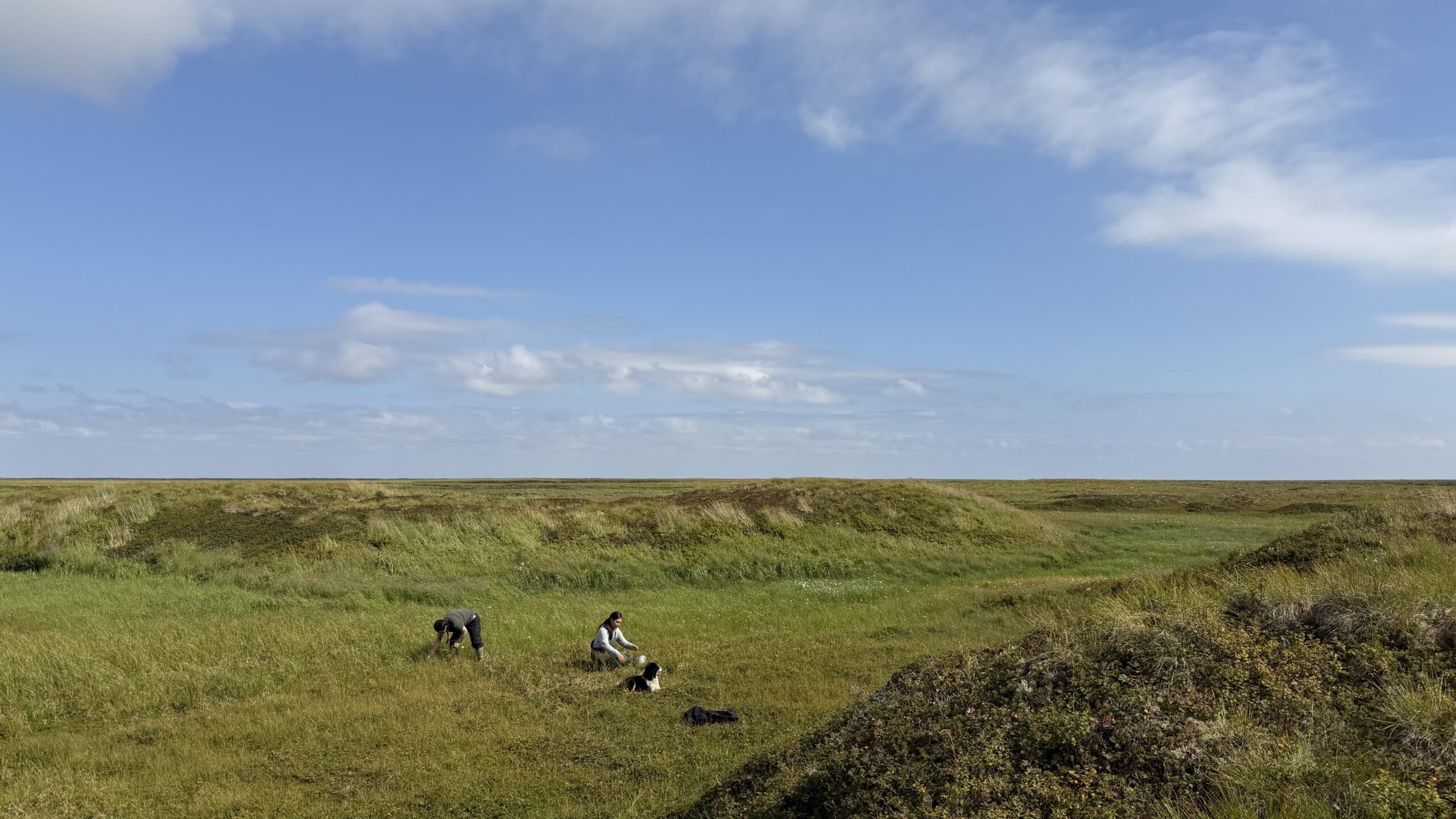
When the salmonberries are ripe in Kipnuk, the Paul family isn’t far behind.
“Yeah, we always pick maybe about 20-15 gallon every summer,” said 24-year-old Caley Paul.
Read more Forget jets and helicopters. Data centers could be Alaska military towns’ next noisy neighbors
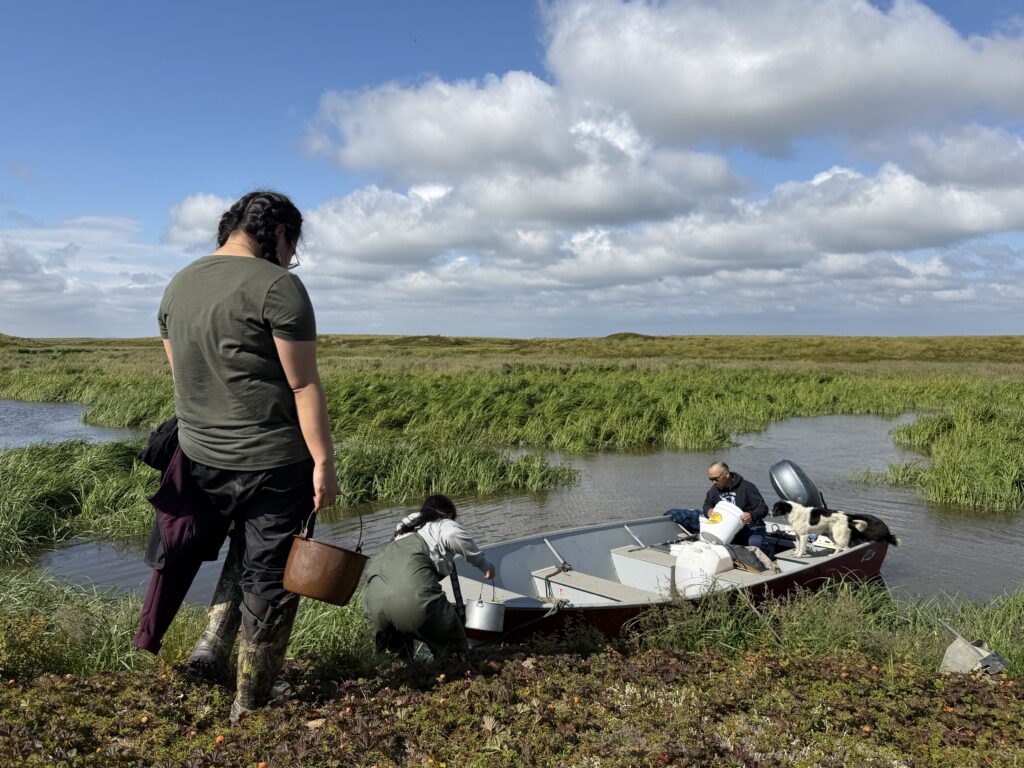
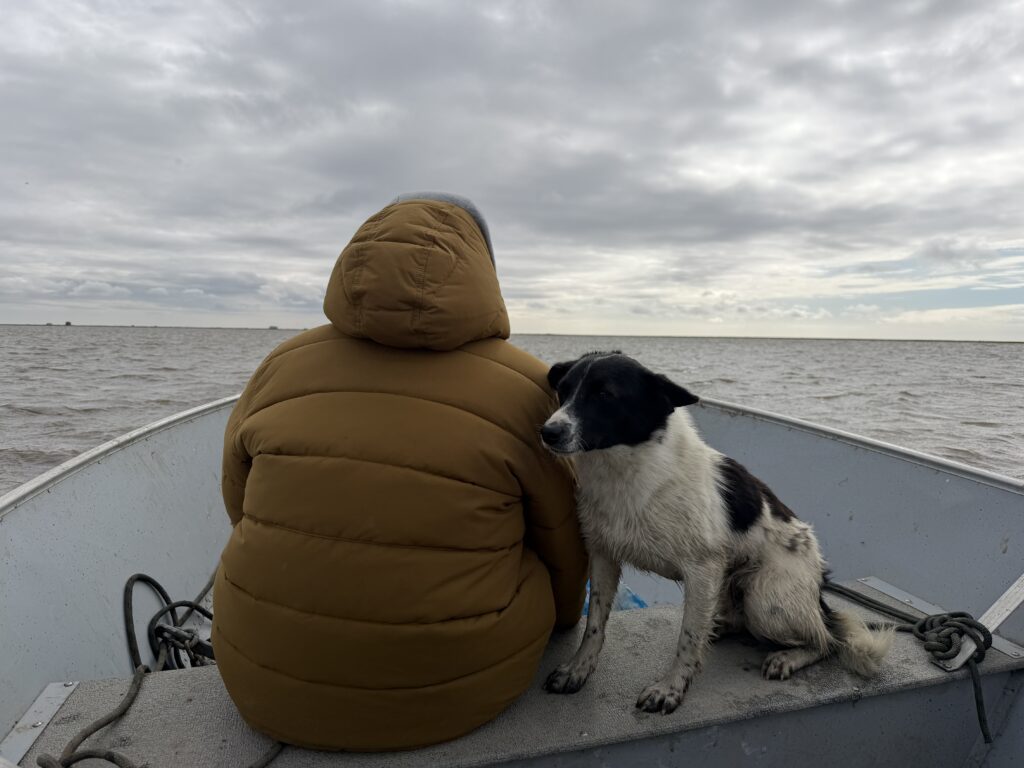
In August, she sat in a bumpy skiff with her father, and cousin. Their dogs, Oreo and Koda stood at the bow, like eager sidekicks.
The expanse of tundra here, up the Kugkaktlik River, is vast and lush. And then, in the middle of it all, a neighborhood appeared.
Caley pointed to a green house and a pink house, standing among six others near the river bank. But there’s no one home.
“They were our neighbors,” she said.
When ex-Typhoon Halong struck their village and other Yukon-Kuskokwim Delta communities in October, Caley’s family’s house stood its ground. But dozens of Kipnuk homes lifted off their foundations. Some, like Caley’s neighbors, floated miles away.
“Sometimes when I look out our window, I’m missing all those houses because it’s so empty now,” Caley said.
Now, the houses scattered across the tundra await winter, when they’ll be moved back to the village.
Caley’s dad, Burt Paul, slowed the boat as the family looked out. It’s been nearly a year since the storm brought the sea to their door. At the time, it felt like the storm wreaked damage that would never be fixed. But it’s been an especially good year for salmonberries — locals speculate that the snowy winter made for a special abundance.
“I thought I’d never seen sea green grass, cloudberries, blackberries,” Burt said. “And it beats my mind that I see food growing, grass growing, fish coming in.”
After the storm, Burt’s wife and younger children went to stay with family upriver in Napaskiak. Caley moved to Scammon Bay. This summer, the Paul family is one of several who have returned to Kipnuk to practice subsistence and come back together.
“Coming home, seeing everyone, the community — it’s heartwarming,” Caley said.
In the repairing town, children played outside. There was pickup basketball at the hoop outside of the school. But soon, it would be time for the kids, including those of the Paul family, to return to other communities. Kipnuk’s school won’t reopen this year.
Burt will stay behind to work on repairing the village.
“It feels like I’m going to lose again, lose my family again,” he said.
He said even so, he wanted to focus on what’s good.
“We gotta set negative aside and take the positive,” he said. “So I want to be positive. I don’t want to be sad.”
But during the ripening of the salmonberries, the family is together on a grassy slough off the Kuguklik River. From the boat, Burt scanned the tundra for salmonberries — or naunraqs as they’re called in coastal Yup’ik.
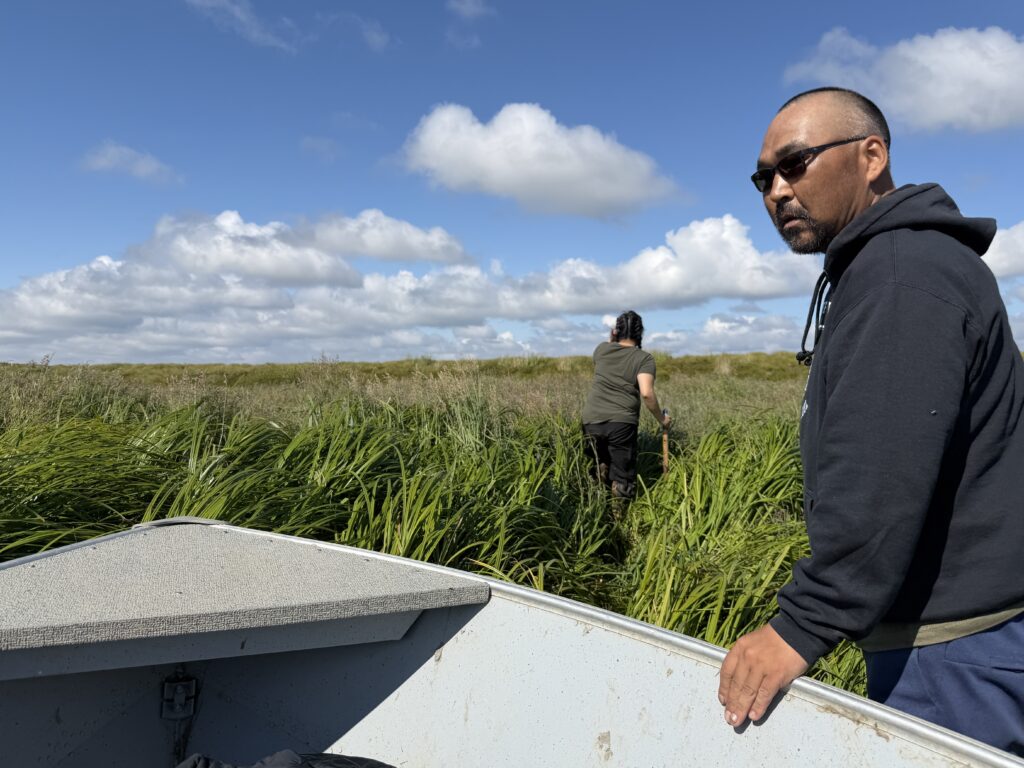
His new skiff — bought with money made as a construction worker repairing the village — is harder to navigate in the brush than his mud boat, which was damaged during Halong.
Read more High winds bring mild to moderate flooding to Kuskokwim River and coastal communities
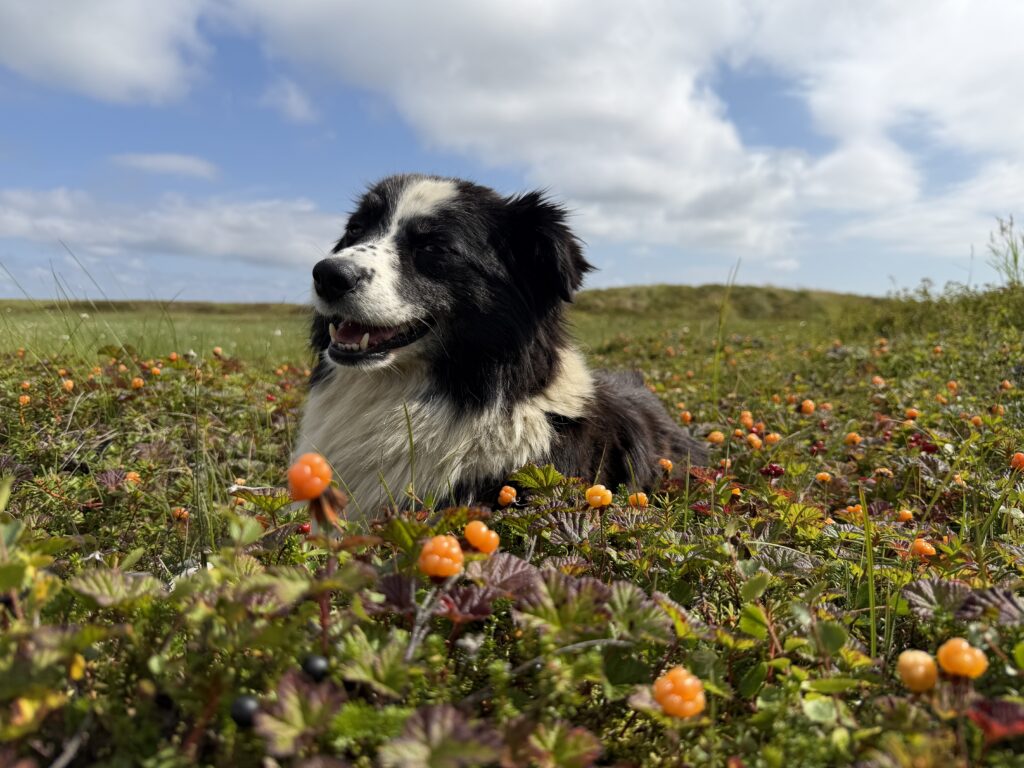
Then, Burt spotted what they’ve been looking for — a carpet of orange.
“Lots of naunraqs,” he exclaimed over the hum of the tiller.
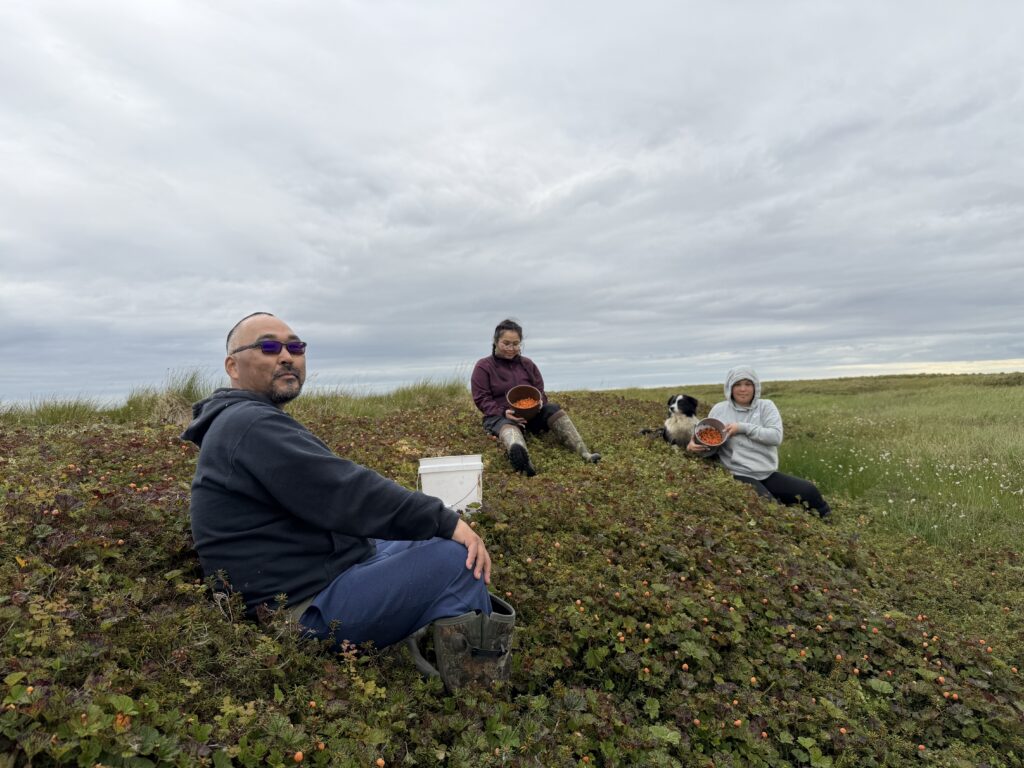
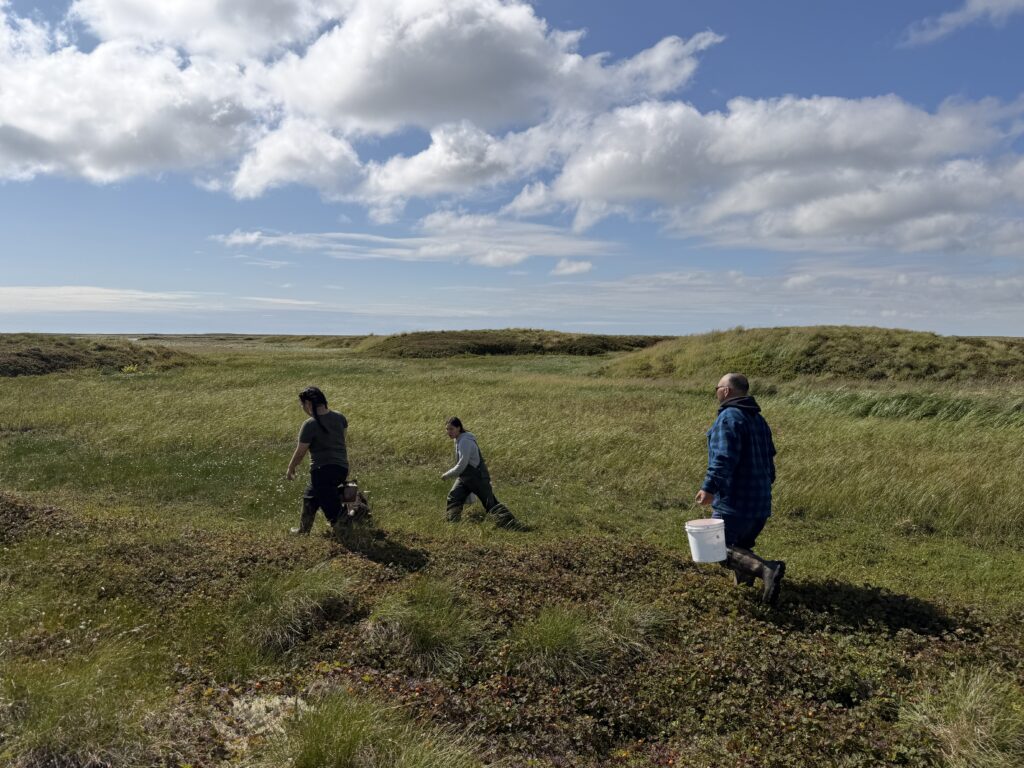
The family piled out of the boat and assumed a familiar rhythm: the girls filled their metal buckets. The dogs bound gleefully around the family. Caley said her dad always likes to scope the whole area, leading far ahead.
It’s always fleeting — salmonberry season.
“Once a year, cloudberries grow and ripen and fall down back to the ground. And you, we get to see for two to three weeks, and then they’re all gone,” Burt explained.
The Pauls typically pick berries and camp out over several days. But this year, it’s been short trips when Burt can get off of work.
It’s a new reality for many Kipnuk families who have returned for the summer, trying to fit in the normal rhythms of summer in between the work of repairing the village.
Raymond Egoak has been able to move back into his house. But with the chest freezer still damaged, he hasn’t been able to put away many berries or harvest meat.
“My wife came two weeks ago when the berries were ready, and I worked half a day” Egoak said. “Half a day after I worked, we go berry picking.”
Others, like Leona Paul came home for subsistence, but quickly found her help was needed aiding the rebuild operation.
“I’ve only been here two weeks, and I came here to pick berries. I ended up being the cook,” she said. “They were wanting a cook, so I took the opportunity.”
The village is still in all-hands-on-deck repair mode, almost a year after the storm.
No one’s been able to put away as much as they’d like, but it’s enough for a taste. Burt Paul said going out is more about keeping life going, even in small doses.
“We always been going out as family. Never miss a year,” he said. “Even though it’s different, we still have a chance to go … we have to keep things going some way somehow, no matter what situation we go through.”
The Paul family spent the afternoon boating from berry spot to spot. They giggled as the dogs ferociously defended them against two musk oxen grazing on shore. The giants didn’t seem to notice.
When the day is done, the family has filled one five-gallon bucket to the brim. It’s not as much as most years, but enough for Burt to make his family his famous naunraq pie, enough for everyone to have a taste.
Read more Republican Treg Taylor leans on experience as attorney general in gubernatorial pitch
Copyright 2026 KYUK