
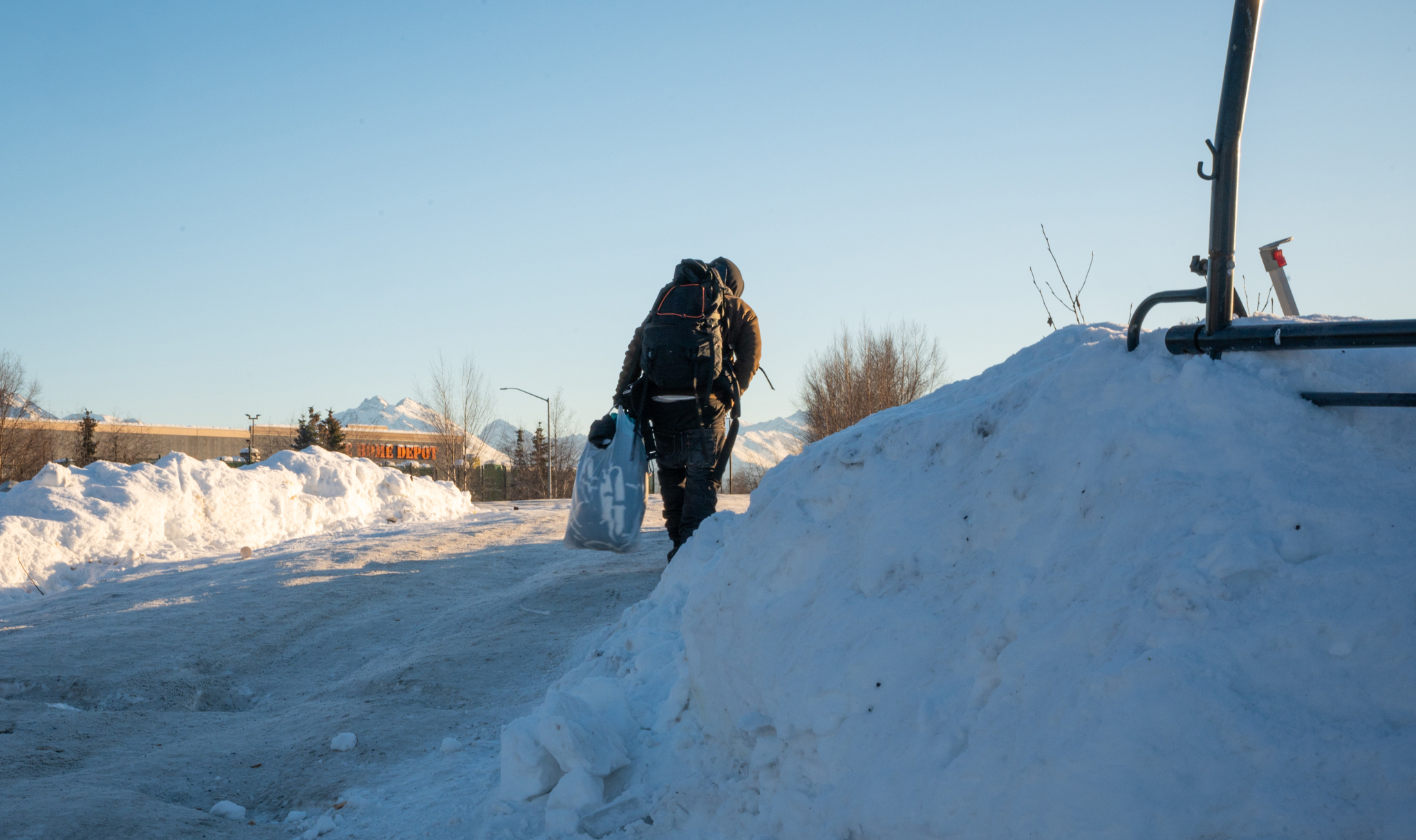
The number of homeless people sleeping outdoors in Anchorage dropped significantly this year. That’s according to the annual Point In Time count, a study that attempts to count every unhoused person across the United States on a single night in January.
Read more Alaska’s North Slope proposed as home for massive AI data center
Anchorage Mayor Suzanne LaFrance says her team has been focused on reducing the number of people who are unsheltered.
In 2025, the city cleared homeless camps and passed a new law that makes it a crime to camp in some parts of Anchorage. The city expanded outreach and crisis response, opened a new homeless shelter and increased the number of year-round beds.
At a homeless and housing committee meeting last week, LaFrance celebrated the decrease, down 28%, from 402 to 291 people.
“That is fewer people sleeping in our public spaces, fewer people susceptible to our cold winter nights, and fewer people unsafe in our community,” she said. “This is good news, but the problem is not solved, and there is still more work to do.”
The overall number of homeless people in the city has also decreased this year, although less dramatically, down 6%, from 1748 to 1645 people.
The Anchorage Coalition to End Homelessness conducts the annual count, and released the final numbers this month.
During the count, outreach workers ask people why they’re sleeping outdoors. The majority said they would have gone to shelter had there been beds available. Jessica Parks is with the Coalition. The shelters were full on the night of the count, Parks said, which was true almost all winter long.
“I think we’ve done a much better job with our coordinated outreach, making sure that when we have beds available, we are very quickly getting people who want those beds into them,” she said.
Read more Prospects fade for imminent end to Iran war as attacks restart
Parks says the fact that the shelters were full is a result of increased communication and collaboration between shelters and other organizations.
And Parks said this year, far fewer people said they were sleeping outdoors because they didn’t know how to access shelter.
“That’s exciting to me personally, because it means we’re doing a good job of letting people know shelter beds are out there,” she said. “In the past, the answer to that question has been higher, so it makes me feel good that that answer was so low.”
Thea Agnew Bemben, special assistant to mayor LaFrance, said people are more willing to go into shelter than they used to be. She says that’s partly because of changes at some shelters, such as lockers for guests, space for pets and shelters where couples can stay together.
“I’d say our demand for shelter and our acceptance of it is growing, which I think is a good thing,” she said.
But she said available shelter beds don’t meet demand. Even now, in warmer weather, she said, shelters are full and sometimes turning people away.
She estimated the city would need an extra 200 shelter beds to meet demand in the winter. That would cost roughly 2.4 million dollars and is not something the assembly is currently considering.
Read more Mat-Su Assembly doubles down on leaf blowers in response to Anchorage rule