
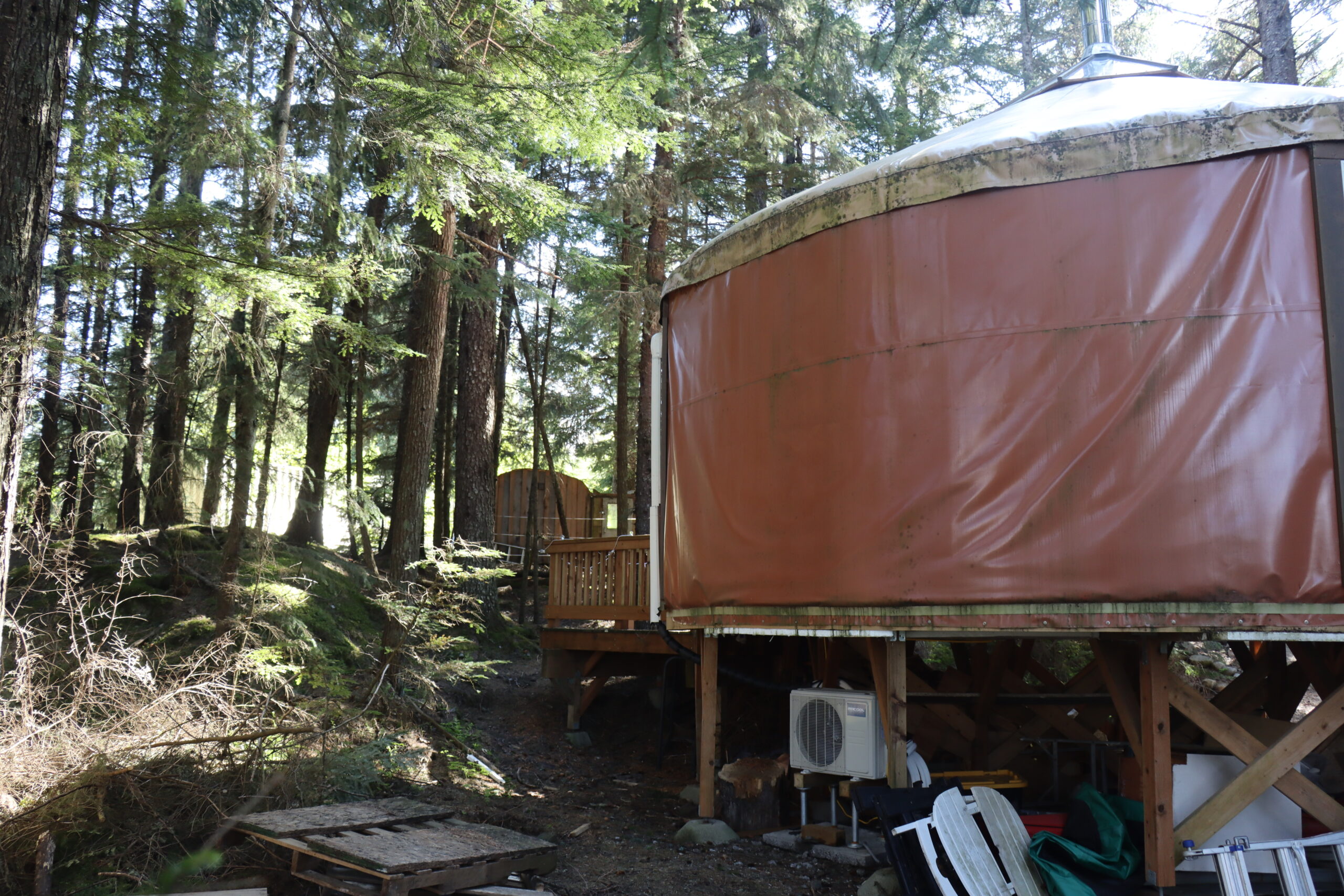
Mardell Gunn lives 40 miles north of Haines, where winters are particularly cold, long and snowy. She heats her home two ways — a wood stove and a 25-year-old oil boiler in the basement.
Read more The Anchorage Weekender: Flings, fish, a flag ceremony and 6 more local events.
“The worst thing in the world be to have the boiler go out in the middle of the winter,” she said.
Soon, she won’t have to worry about that. Gunn is getting a heat pump installed, paid for in large part by a federal grant. She’s among hundreds of households across Alaska’s gulf coast who have applied to the program.
“I’m doing it because I would really like to use less fossil fuels, and be less dependent on the heating oil,” she said.
Gunn said the $8,500 incentive from the Accelerating Clean Energy Savings program is what put her over the edge in deciding to get a heat pump. The money will cover about half the cost of the two systems she’ll need to heat her home.
The program’s first year has been slow. The money comes from a $38 million grant from the U.S. Environmental Protection Agency to two Southeast-based nonprofits. The aim is to lower the cost of installing more than 6,000 electric heat pumps across the region.
The groups – Southeast Conference and Alaska Heat Smart – started accepting applications about a year ago. But as of early May, they had received fewer than 600 applications. Just one hundred systems have gone in so far.
The grant winds down in October of 2029. Which means to use the full grant, applications, approvals and installations will have to pick up dramatically.
“I feel like we’re behind. But hopefully we will catch up,” said Jessie Huff, who manages the energy program at Southeast Conference.
Huff said her goal is to enroll 1,000 people in the program before the end of this calendar year. Which is why they’ve recently started ramping up advertising.
“We are really trying to get the word out,” Huff said.
Heat pumps are highly efficient, said Paul Carrington, the owner of Clear Water Plumbing and Heating in Haines. That can mean lower bills and less energy use, particularly where the electric grid is primarily fueled by hydropower.
“I’d encourage anybody that can afford to install one to get one. You will appreciate it,” Carrington said.
Read more Legislation would prevent state from using psychiatric hospitals as makeshift foster placements
Carrington said an exception in Southeast would be snowbirds who hope to install a heat pump, put it on its lowest setting, and head out for the winter.
“What we find in this region is you get these shoulder seasons that have high humidity, and it creates a short cycling issue within the units,” he said. “They’re not designed to actually be set at their lowest setting in that outdoor temperature. They’re designed to be used to produce heat.”
Households located along Alaska’s gulf coast from Metlakatla to Kodiak can apply. That does not include Anchorage, Palmer or Wasilla, but it does include the Kenai Peninsula. The address you apply for must be your primary residence, and your main heating system must be oil, propane, gas or wood.
The incentives range from $4,000 to $8,500, based on income. For lower income households, the program pays a pre-approved contractor directly, so the household doesn’t owe anything up-front.
The low-income program has been harder to get off the ground because it requires finding and certifying contractors who are willing to participate, Huff said.
Carrington, of Clear Water Plumbing, said his company is happy to install heat pumps. But at least so far, he’s decided against participating in the low income program, which he said would require a lot of extra back-end work.
“It’s just that the amount of paperwork that it creates for us is not worth it for the very few that are going to go in,” Carrington said.
The complicated process can be a holdup for households, too.
“They have to really want to do it, and it’s going to cost money, and a lot of times the incentive doesn’t pay for all of it,” Huff said.
But for Gunn, in Haines, who qualified for the low-income option, the incentive was too big to pass up.
“Not everyone has $8,500 laying around,” she said.
To learn more about the program, or to apply, visit https://akheatsmart.org/aces/.
Read more An Alaska reporter investigates billions of dollars in subsidies that went to telecoms