
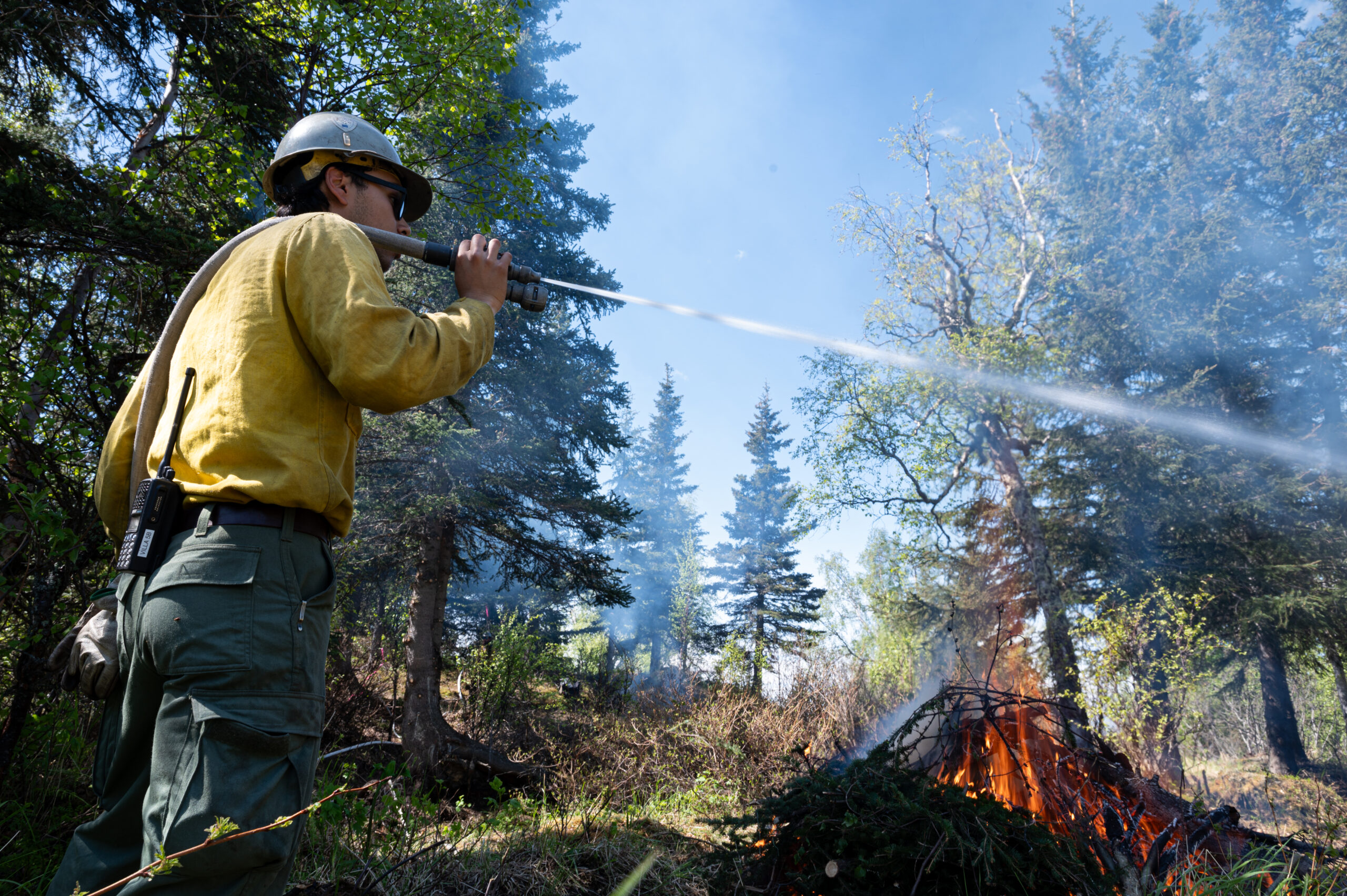
The fire season in Anchorage is likely to be average, according to the Anchorage Fire Department.
Read more Alaska Legislature rejects Dunleavy AG appointee Stephen Cox
But even during an average year, the risk is still high, according to Jon Glover, chief of the department’s Wildfire Division. In cities like Anchorage, Glover said, a small fire can create a big impact.
“We want to be really, really, really prepared as we get into those hotter and drier months if we have them in the summertime,” he said.
Long hours of sunlight and wind can dry out the forested areas that make up the vast majority of the city, increasing the potential for wildfires.
Early in the season, the department will devote most personnel to wildfire response, Glover said, but in July, the Wildfire Division will start clearing brush and thinning highly flammable spruce trees. The focus will be on areas where homes butt up against wild areas and residents have few evacuation routes.
Last summer, the division worked on several similar projects in places like Campbell Airstrip Road and the Hillside. But Glover said there’s still a lot to do.
“The bottom line is, we went for about 15 to 20 years with almost no mitigation actions within the municipality,” he said. “It’s pretty hard to make up that gap, those eight to 12 projects that we’re doing, that’s just a start.”
The city founded the Wildfire Division in 2024, partly in response to disastrous fires in the Lower 48. The projects are funded with federal grants and the plan is to continue clearing out underbrush and other fuel sources in strategic areas, Glover said. Then, the division plans to create a schedule to maintain the work.
The division also has grant money for public outreach projects. Residents can sign up for a program called Firewise, which assesses the fire-readiness of homes. People in more fire-prone areas can also get a sprinkler system through the program, which APD would hook up to water tanks in case of a wildfire, protecting the home.
More than anything, Glover said, it’s important to have a plan.
“Having your plan figured out, knowing what you’re going to do, what your evacuation route is going to be, having your stuff ready to go in case you’re going to be displaced, having an action plan for your kids if you’re at work – that kind of a deal,” he said.
Glover said the best way to get information about wildfires and other disasters is to sign up for the city’s text alerts, called Smart911. The Anchorage Wildfire Division website has a daily fire danger rating.