
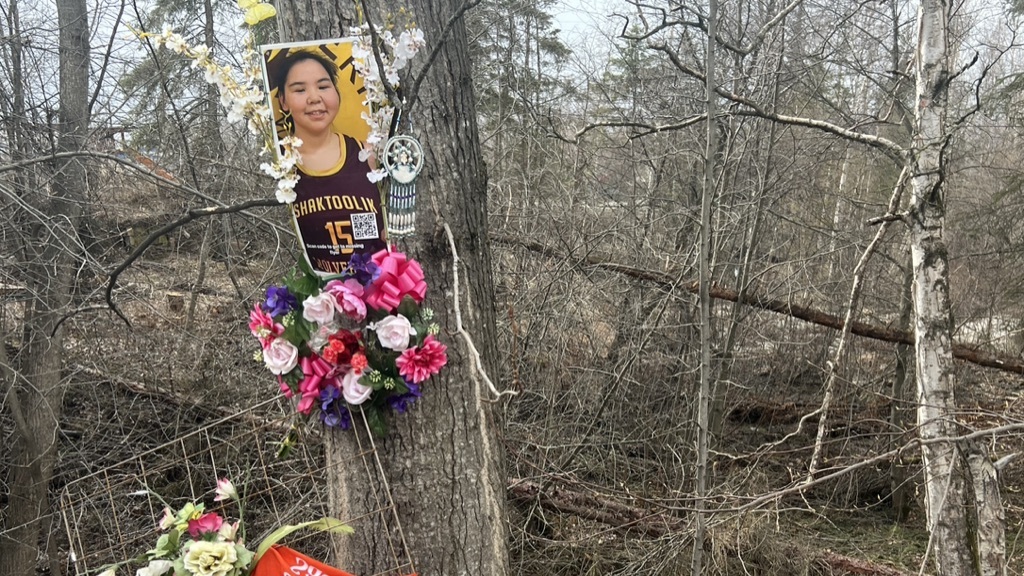
There is no evidence of foul play in the death of Kelly Hunt, according to Anchorage police, who said their investigation of what happened to the 19-year-old Shaktoolik student is nearing its completion.
Read more Alaska Legislature considers bill mandating paid leave for many new parents, starting in 2030
Hunt disappeared in January while visiting Anchorage on her way to college in Soldotna. In April, Hunt’s remains were found in a ravine in Spenard, the same Anchorage neighborhood where she had been staying with a friend.
Advocates for Missing and Murdered Indigenous People raised concerns that Hunt might have been the victim of a crime and questioned the police response on her case.
The medical examiner’s preliminary report determined Hunt died from hypothermia and exposure, with alcohol in her system, Anchorage Police Chief Sean Case said Monday.
“There’s no indication that there’s physical trauma. There’s no indication that an assault has occurred,” Case said. “So, most of those questions — on whether or not there was a homicide — those questions have been answered through the medical examiner’s process.”
Case said Hunt was missing for more than 100 days, and prolonged exposure to the elements made it nearly impossible to determine the exact time of her death.
Before closing out the investigation, police plan to conduct follow-up interviews to better understand the circumstances leading up to her death, Case said. Depending on what they learn, the investigation could shift back toward a criminal case, he said, but for now, there is no evidence of foul play.
“The fact that we had a 19-year-old die of exposure, that’s a tragic situation, and I would anticipate anyone who hears the story would think it’s tragic and unfortunate and have a lot of emotion behind that,” Case said. “But the fact that somebody leaves a residence in the middle of the night to potentially go meet up with somebody, I’m not sure that decision, in and of itself, is suspicious.”
Hunt was supposed to catch a bus from Anchorage to attend the Alaska Christian College in Soldotna. Her friends told police she left the morning of Jan. 7to meet with someone to buy alcohol and had left her purse and suitcase behind.
Read more National Park Service proposes more cars and tour buses in Denali National Park
The investigation was further complicated, Case said, because Hunt’s disappearance wasn’t reported until four days later. Despite that, Case said he believed his police officers and detectives did what they could.
“When you start four days behind, when somebody goes missing, you’re pretty limited in that immediate response, but we did the things we were supposed to do,” Case said.
The MMIP advocates, including Antonia Commack, still questioned the police handling of Hunt’s case. Investigators are drawing conclusions too soon, without first questioning the people who last saw Hunt, Commack said.
“How are you going to make that determination before you speak to those people?” Commack said. “Because the bottom line is she is not old enough to drink herself. Somebody furnished her alcohol, and she wound up dead. That should be a crime.”
“I honestly feel like they’re just doubling down, making it seem like they did a good job, throwing out excuses while ignoring the things that they didn’t do,” said Commack, who has been critical of the police department’s delay in listing Hunt’s name in national missing person databases. She also said police should have begun searching the neighborhood immediately with dogs trained to pick up the scent of human remains.
The department doesn’t own its own team of recovery dogs, which belong to volunteers and are used selectively, Case said. The circumstances surrounding Hunt’s disappearance did not call for their use, he said.
The Anchorage Police Department timed its report on the Kelly Hunt case with the launch of a new online dashboard that tracks missing persons cases in Anchorage, as well as the department’s homicide clearance rate.
The dashboard confirms that Alaska Natives make up a disproportionate share of both missing person and homicide cases, but it shows that cases involving both Native and non-Native victims are solved at about the same rate, Case said.
Read more Alaska House weighs negotiated compromise cutting taxes for Alaska LNG project