
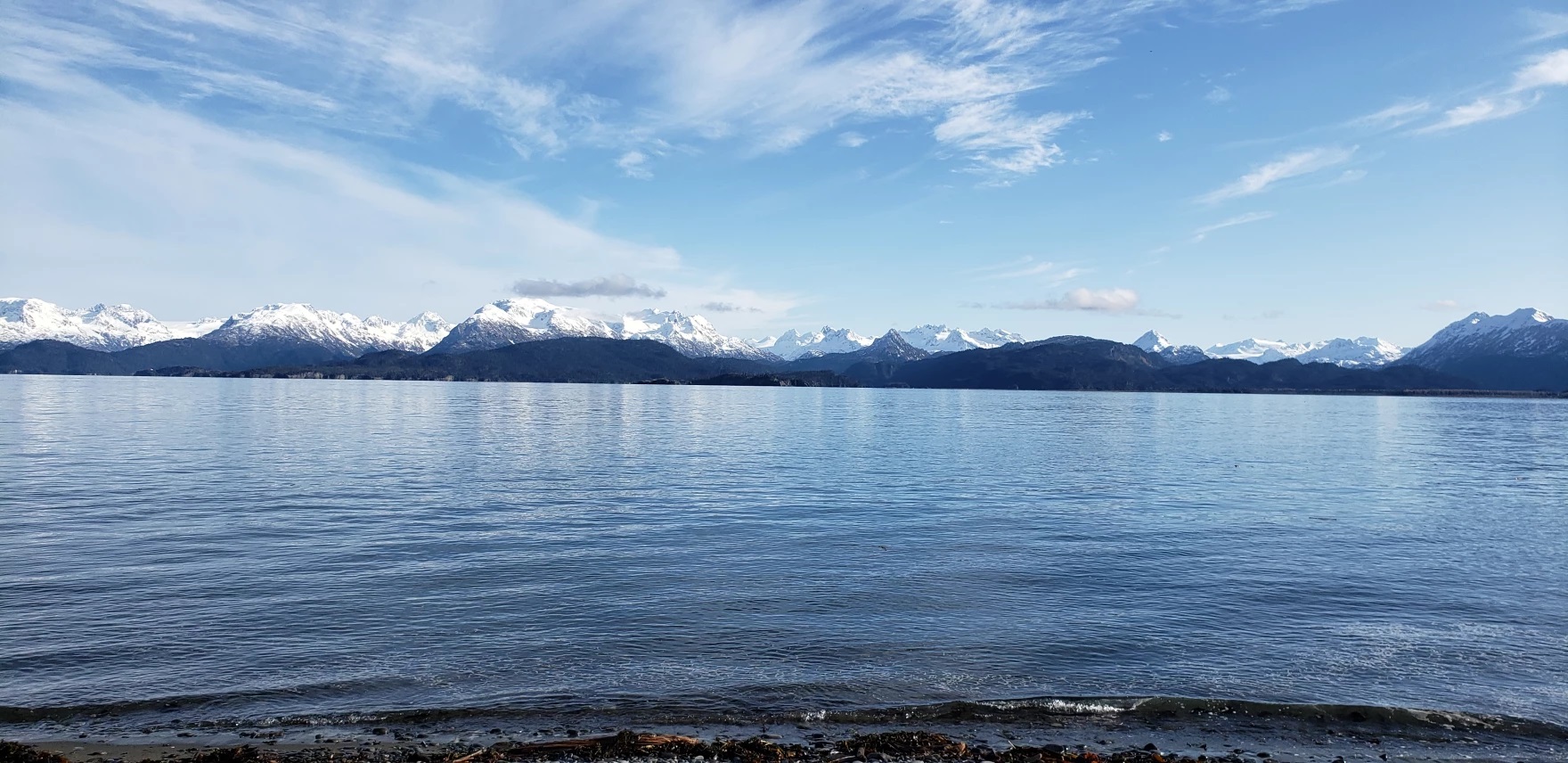
It sounds like something out of a sci-fi novel, but a California-based company literally made it rain last month over part of the Kenai Peninsula. Officials with the aptly-named Rainmaker say they generated millions of gallons of rainfall by flying a drone into a cloud and dispersing a chemical. While company leaders are calling the test a success, journalist Max Graham reports that local residents and officials say they were blindsided by the experiment.
Read more Kake tribal leader Joel Jackson dies at age 70
Graham wrote about the experiment in the Anchorage Press and says it all began in the skies above Kachemak Bay on August 23rd…
Max Graham: The drone went way up in the sky. It had some flares on it with a chemical called silver iodide, and released the flares into what’s called a super cool cloud, and let out the silver iodide into this cloud, and effectively, according to the company, generated 19 million gallons of water that fell, I think, mostly as rain in the Homer area. That sounds like a lot. Spread out across a wide area, it’s like less than a 10th of an inch, maybe 100th of an inch of water. So on the ground, maybe not even noticeable, but according to the company, 19 million gallons of water was created that day.
Wesley Early: Yeah, it sounds a lot like sci-fi. This process is called cloud seeding; how does that work?
MG: Yeah, so it’s a technology that, I’d sort of loosely heard of, didn’t really think it was legit, and apparently, it’s something that companies have been testing for decades, going back to like the ’40s. But it’s sort of been generating a lot more interest recently as areas, particularly in the Lower 48, face drought and sort of water supply issues. That’s this company’s main focus: operations in Utah and trying to get levels back up in Salt Lake in Utah and the Colorado River or to sort of help ski resorts that are struggling with a lack of snow, and so that’s what their focus is. But they came up here to Alaska to do what they said was just a sort of test in the summer, when the conditions are better here for it.
WE: Why are Alaska’s conditions better?
MG: So they say that they need just the right temperature and the right kind of cloud. What I mentioned, the super cool cloud, pretty much the water droplets in the sky have to be cold enough so that they freeze when the silver iodide gets released. The folks at this company that I spoke to said that Alaska really is like the place to do that in the summer. In the winter, they can do it in the Lower 48, which is really where they’re actually focused on.
Read more The Anchorage Weekender: A fungus fair, big bears vs. big veggies and 9 more local events
WE: So, how has the local Homer community and lawmakers, how have they responded to this drone launch?
MG: It really struck a nerve, and that might be putting it lightly. There’s been a lot of backlash from elected officials on the Kenai Peninsula and across the political spectrum too. You know, conservative political leaders, also environmental advocates, I spoke to are concerned. I think there’s a mix of concerns. One is the mayor of the Kenai Peninsula Borough didn’t know about it until after the fact, and there’s a sort of question of was there enough public notice and sort of community outreach in advance. And then an environmental advocate I spoke to in Homer has concerns just about what does this technology do to the environment, or you know, is there a health ecological risk?
The company says that’s totally safe. They say they release 375 grams of this stuff. I mean, that’s less than a pound of it, and over this really wide area, and it doesn’t really appreciably change concentrations on the ground of it. It’s also sort of caught I think state regulators on the back foot a little bit. The Department of Environmental Conservation sort of did a review and just sent a long letter to legislators saying there’s not a regulatory framework for this, and so there’s no DEC permit that regulates it that Rainmaker needed to get. So it sparked this discussion at the sort of regulatory level, but also on the ground on social media. There’s tons of concerns just about like, ‘What? This company from California came and made it rain here. Like, what the heck?’
WE: What has Rainmaker said in response to these concerns?
MG: I mean, they say they did do outreach. They said they met with the Alaska Department of Natural Resources, you know, before they did this. And according to the company, they presented a plan of operations that said they were going to be doing cloud seeding, and DNR pretty much told them you’re allowed to use a drone for research purposes without a permit on state land. You know, my sense just in my reporting is that the backlash and this operation has kind of confused regulators and also really sparked discussion of like, should there be regulations and what would that look like?
WE: It sounded like they understood the backlash, though… Rainmaker did.
MG: Yeah, and I mean they said they really want to do more outreach. They’ve been very responsive and they’ve helped me and my reporting, like get information. And it sounds like they’re open to having more discussions with community members. Maybe even coming back to have some kind of open house or town hall on the Kenai Peninsula. They said they don’t currently have plans to come back to do any more cloud seeding next summer, but you know I think it’s a little early to know.
Read more Arctic Report Card gets new support after NOAA funding cut