
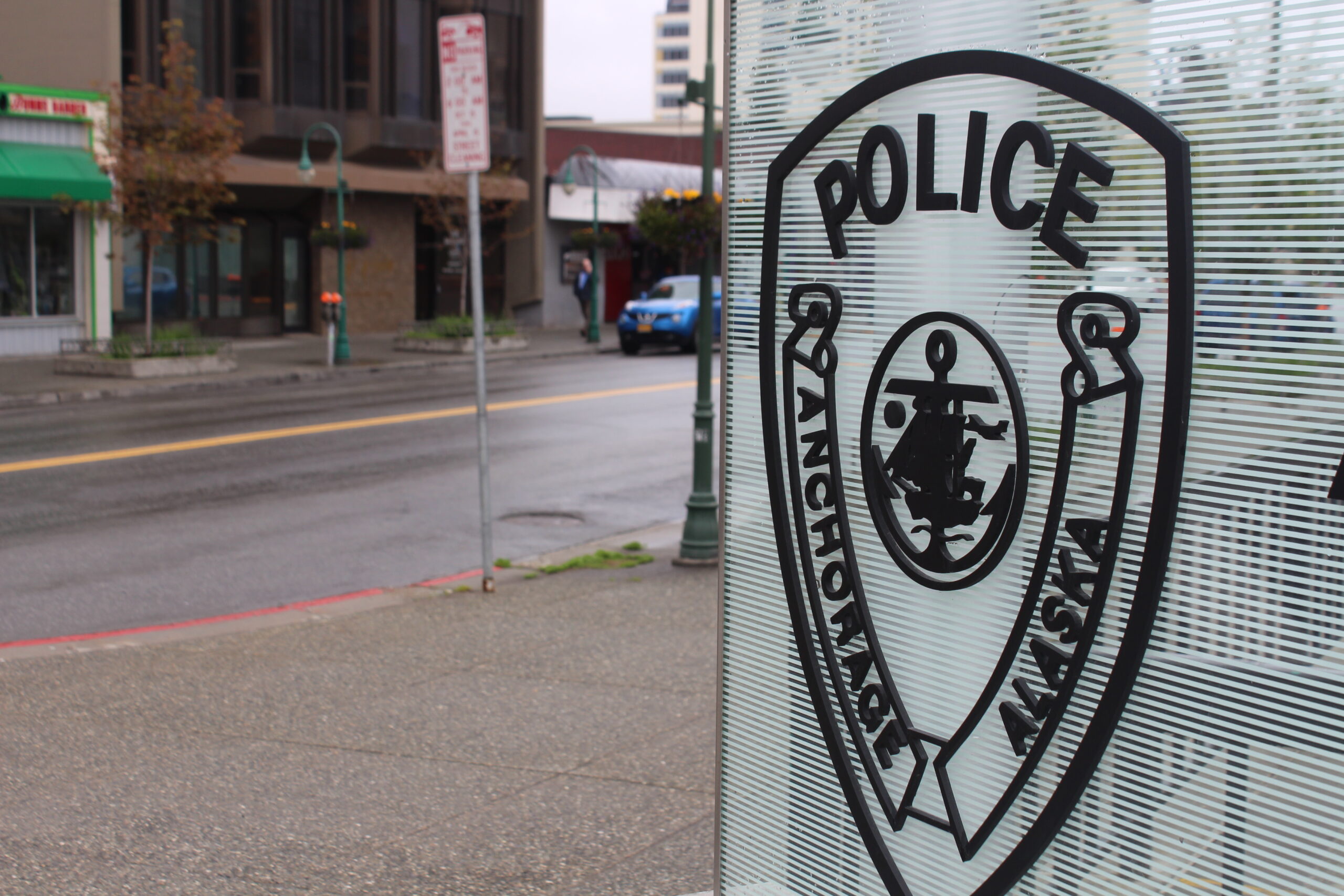
Anchorage city leaders have been working to reestablish a commission that would give residents more of a voice in how the city’s police, fire, health and emergency management departments operate.
Read more Huna Totem plans to scale down cruise ship dock project as cost escalates by more than $100M
But even after months of meetings and input, the proposed commission’s various stakeholders are still not in agreement, as the Anchorage Assembly is set to soon vote on the public safety commission’s structure and the powers it would have.
For almost 30 years, Anchorage had a body to whom members of the public could provide input and advice related to public safety. It was called the Public Safety Advisory Commission, but it dissolved in January of 2024.
Anchorage Assembly chair Anna Brawley said the previous commission didn’t represent a wide enough swath of the city’s residents.
“The representation had essentially gotten out of whack,” she said. “The idea being that if it’s supposed to be a broad kind of cross-section of the community, it ended up being a lot of folks who are former law enforcement or former military.”
The Assembly in 2025 convened a task force of community stakeholders to reimagine an updated commission. Brawley and West Anchorage Assembly member Kameron Perez-Verdia said they took the group’s feedback and crafted a proposal for a new commission, to be called the Anchorage Public Safety Partnership Commission.
But different task force members had different ideas about what level of authority the commission should have, Perez-Verdia said. Should the commission primarily advise city leaders? Or should it have oversight and investigative powers?
Perez-Verdia’s proposal, the one now before the Assembly, is the former.
“This is the direction we felt like was in the best interests of the city, so it was our choice to move in that direction,” Perez-Verdia said at a worksession Tuesday. “It focuses on community partnership, systems improvement, policy review, community engagement, transparency, building trust, and continuous improvement of our public safety departments.”
“We are not saying investigative oversight is not important,” he said. “We’re saying it’s a different conversation than the one we’re having today.”
Some task force members, like Mercedes Arciniega, aren’t happy with the final proposal. Arciniega works with the Alaska Public Interest Group and said many of the group’s members wanted the commission to have oversight powers. She told Assembly members at a meeting in June that the proposal was watered down.
“The specifications of this version demonstrate that this potential commission is absolutely barred from having such abilities,” Arciniega said. “And so I have to ask again, are we just heading right back to where we were, where this thing is going to just get sunset and just kaput?”
Anchorage NAACP President Cheryl Cox Williams was also on the task force and said much of the group’s dialogue centered on the Anchorage Police Department, in light of a high number of police shootings in recent years.
Since the public safety original commission folded, Anchorage police have shot 18 people, 11 of whom died.
By focusing on the city’s other public safety agencies – like fire, health and emergency management – the commission’s scope became too broad, Cox Williams said.
“This all started from what I believe was an emotional response to the unfortunate deaths that were happening during involvement with law enforcement,” she said. “So stick to the mission, and if you feel, and we do feel, you need attention on these other areas, it is now diluting what we started.”
Read more Natural gas supplies “not looking good” for southcentral this winter, Enstar says
Who would serve on the commission has also been a point of contention. One version of the proposal would’ve had five city employees, representing various public safety departments, as voting members of the commission.
That would have given the city too much influence, said Amanda Bremner, deputy director for Native Movement, an advocacy organization that was part of the task force.
“A commission where the Anchorage Police Department can vote against its own recommendations is not community-led, it’s not accountability, and it is precisely what communities have pushed back against since 2024,” Bremner said.
The latest version of the proposal would make the city employees on the commission non-voting, advisory members. That was in response to community pushback, Perez-Verdia said.
“We consistently heard both at the meeting we were all at and through lots of conversations that that version weakened the community leadership for this,” he said. “The commission no longer appeared to be sufficiently independent.”
Whether the Assembly will even reestablish the commission is still up in the air.
Some Assembly members agree with the critics who say the commission should have more oversight authority. North Anchorage Assembly member Sydney Scout is floating an amendment that would allow the commission to conduct investigations.
“I believe that the commission, in order to be effective, needs to have enhanced access beyond members of the public and needs to be able to actually make recommendations grounded in real facts, real data, real conversations with people involved in potential incidents and systemic-level patterns,” she said.
Another of Scout’s proposed amendments would give commission members broader access to confidential public records.
Meanwhile, other Assembly members are seeking to increase law enforcement’s influence on the commission.
South Anchorage Assembly member Zac Johnson, a former marine and state trooper, co-sponsored an amendment that would require two seats on the commission be filled by people who’ve been police officers or have an immediate family member who has been one.
“I will tell everyone, having been a law enforcement officer, that it is hard to understand the job until you’ve done the job,” Johnson said. “And when we talk about a commission that is meant to bring together a variety of perspectives and serve as a partnership, I think that that’s a pretty important voice to hear.”
The Anchorage Assembly is set to take public testimony on the proposal at its July 21 meeting. They could vote on it as early as that evening.
Read more King Cove Road construction set to begin after clearing final federal hurdle