
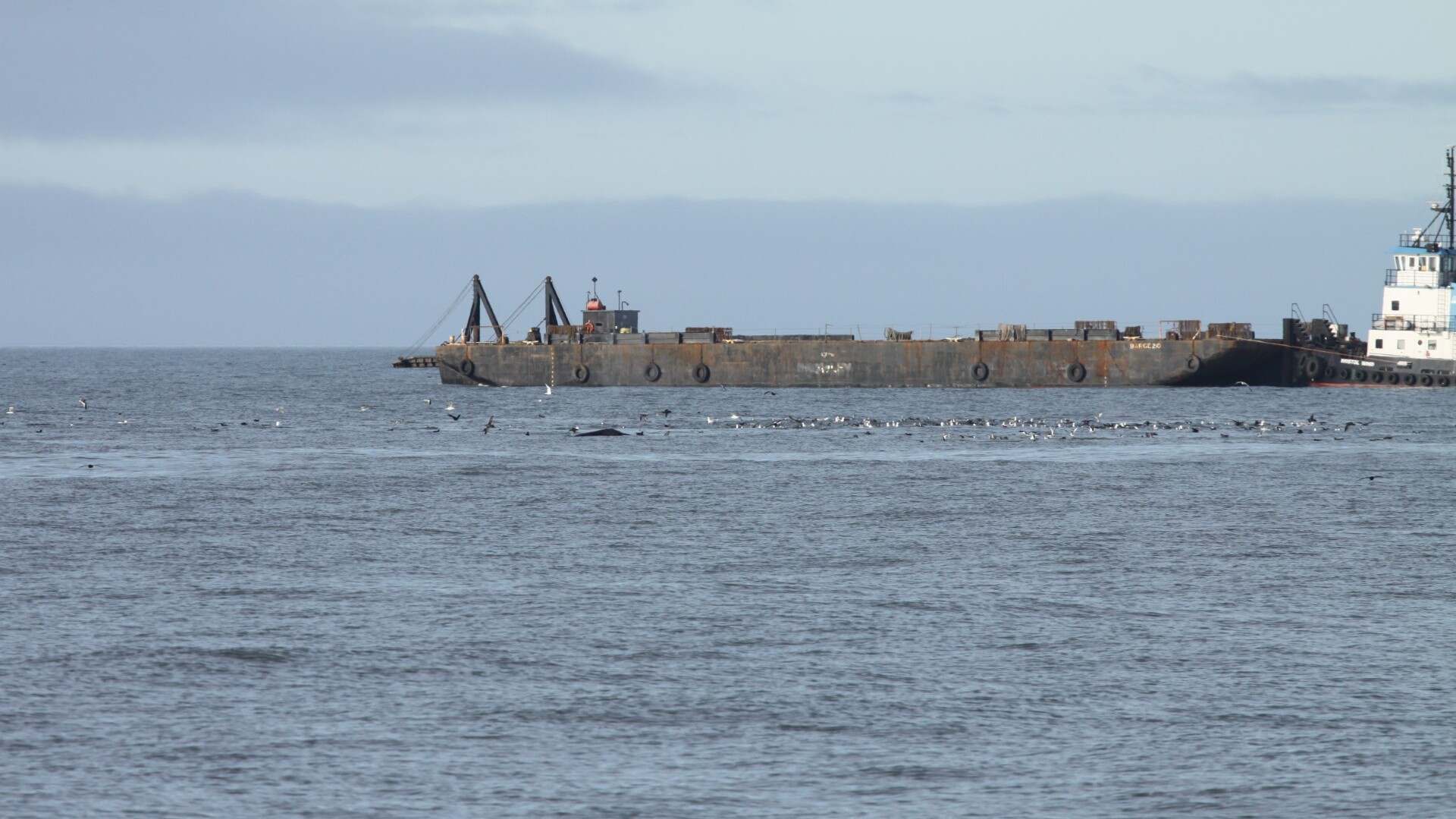
In the increasingly warming Arctic, less sea ice means more ship traffic. In two recent studies scientists are looking at how that affects marine mammals.
Read more Man who pled guilty to Murnane murder in Homer gets 87 years in prison
The studies, published in June, concluded that for bowhead whales and ringed seals, exposure to ships during the ice-covered season is relatively low for now. Still, scientists have concerns about the future effects of ships on wildlife.
Angela Szesciorka, a researcher with Oregon State University, led a study looking at how ships and changes in sea ice affect bowhead whales as they migrate between the Arctic and Pacific oceans through the Bering Strait.
Szesciorka found that, while bowhead whales have historically spent winter in the Bering Sea, they move north in low ice years, following the ice edge. That also means moving away from areas with the highest density of ship traffic, she said.
“A really nice finding was that in the winter periods, there was much less overlap with vessels when they shifted north,” Szesciorka said.
Szesciorka said that, as the whales move north, their paths overlap with the paths of fewer ships, but the ones they do overlap with are larger and slightly faster, like container ships and oil tankers. A collision with a ship like this is more likely to be lethal, she said.
The second study looked at ringed seals. Donna Hauser, a research associate professor at the University of Alaska Fairbanks International Arctic Research Center, co-authored Szesciorka’s study and also led a year-round project looking at how the seals are exposed to ships in Alaska’s Arctic.
Hauser said scientists were especially concerned about ship strikes during the ice-covered season, when ringed seals give birth.
Read more Yes, you can have style in Alaska. Here are three tips for expressing it.
“When they’re using really dense land-fast ice in particular and giving birth to their pups, they establish the lairs,” Hauser said. “So activities like ice breaking, for example, could be really concerning.”
A surprising takeaway for Hauser was that during the months when sea ice is present, ringed seals were exposed to less ship traffic than in other months.
“There’s actually relatively little overlap with ring seals, but the potential for future impacts is still there,” she said.
Both studies used 10 years of location data from different types of ships, along with location data for bowhead whales and ringed seals. The North Slope Borough Department of Wildlife Management helped with tagging the animals.
Both researchers said that, from looking at species in other parts of the world, scientists know marine traffic can displace animals from their preferred habitat, affect their behavior and even, like in case of narwhals and belugas, change their vocalization.
“With narwhals, they’ve seen that when vessels are present, they tend to go silent,” Szesciorka said.
A growing probability of ship strikes is a big concern as well, she said.
Hauser said documenting marine mammals’ exposure to ships is important because it provides a baseline for researchers, as they expect traffic to keep rising.
Read more Alaska DOT identifies $350M low bidder for Tustumena replacement