
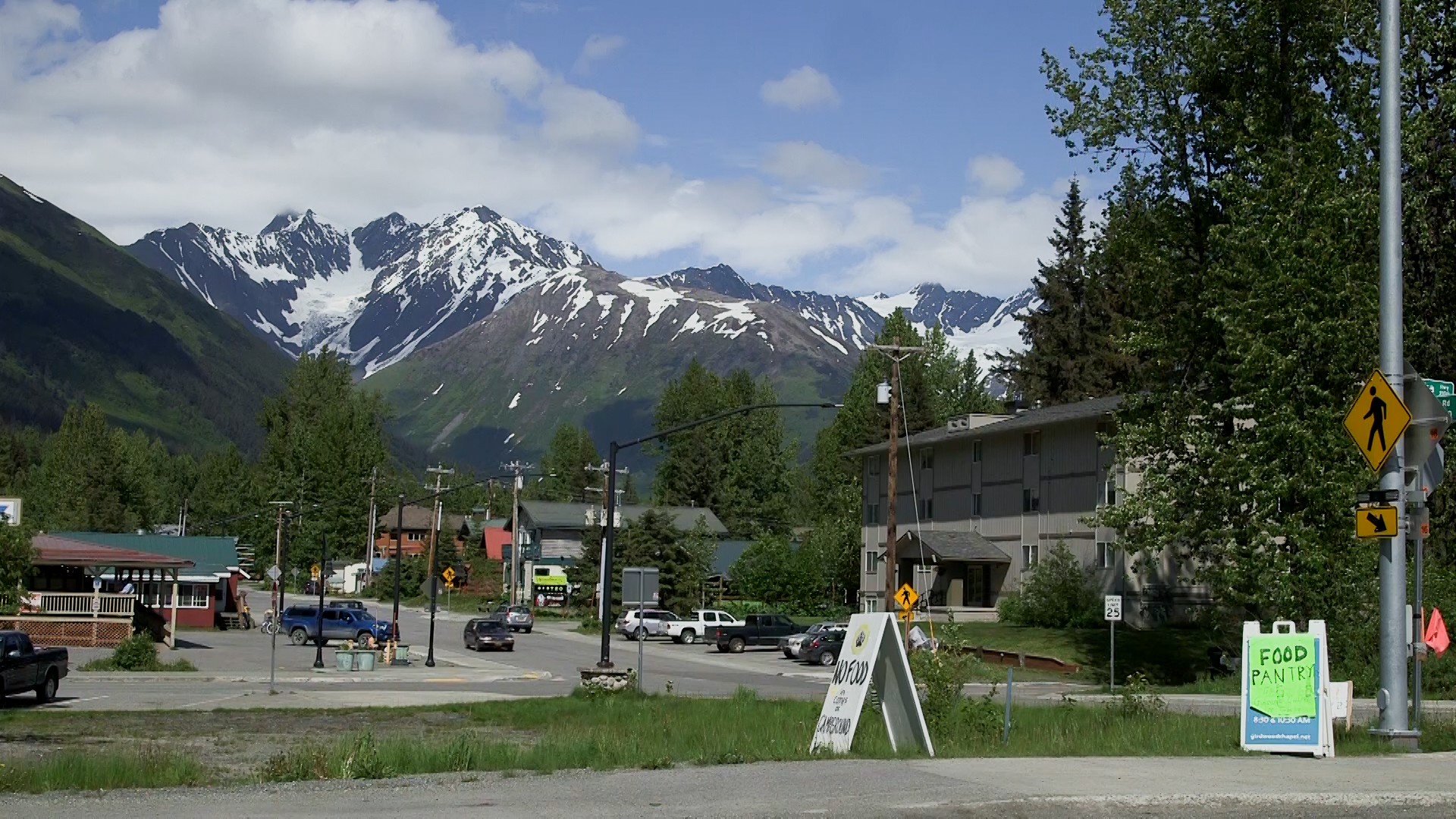
Homelessness is on the rise in the ski-resort community of Girdwood. That’s according to Jessica Parks with the Anchorage Coalition to End Homelessness.
Read more New Alaska law will allow pharmacists to provide more healthcare
“The lack of affordable housing is really driving the inability for the people who work in Girdwood to find housing in Girdwood,” she said.
Housing costs are roughly 30 percent higher in Girdwood than Anchorage, Parks said. The town is home to Alyeska ski resort and while it’s technically part of the city of Anchorage, it’s about 40 miles southeast of the Anchorage Bowl.
Per-capita, there are more unhoused people in Girdwood than in Anchorage. About .65 percent of the population is homeless in Anchorage, while in Girdwood, it’s twice that at 1.33 percent. But in Girdwood, homelessness is less visible, Parks said. The numbers come from the annual Point-in-Time Count, a study that attempts to count every unhoused person across the United States on a single night in January. In Girdwood this year, outreach workers found and talked to 30 unhoused people. Parks said the profile of homeless people in Girdwood is different from Anchorage. All of them had jobs, and the vast majority were sleeping in vehicles.
“The homeless population in Girdwood is – I’m not going to quite say ‘invisible,’ but far less visible than here in Anchorage,” she said.
Parks said the unhoused people in Girdwood told outreach workers they were homeless because they could not find housing. That’s different from Anchorage, Parks said, where sometimes there are more complex reasons, like substance misuse, chronic disabilities or mental health issues.
Read more The long fight for independence in St. Paul, one of Alaska’s most remote communities
This January was the first time Girdwood participated in the Point-in-Time Count, so it’s not possible to compare to past years. But Parks said outreach workers have been in contact with a steadily increasing number of homeless people. Over the past three years, documented interactions have more than doubled, she said.
When outreach workers make contact with someone who needs help, it can be hard to find a solution, because often there just isn’t housing available, and there is no emergency shelter or transitional housing projects in Girdwood. But there is a three-times-a-month food pantry, and recently, a resource fair at the Girdwood library. Sometimes connecting people to assistance, like SNAP benefits, or Medicaid, is enough to offset expensive rent, Parks said.
“If a family maybe was spending a disproportionate amount of their household income on those types of expenses, if we can help reduce those, maybe they can afford the ridiculous rents,” she said.
But Parks said sometimes the answer is to leave Girdwood. She said if people are willing to leave, the Anchorage Coalition to End Homelessness helps find homes and jobs for them in Anchorage.
Read more A new model could help predict rusting rivers in Alaska, researchers say