
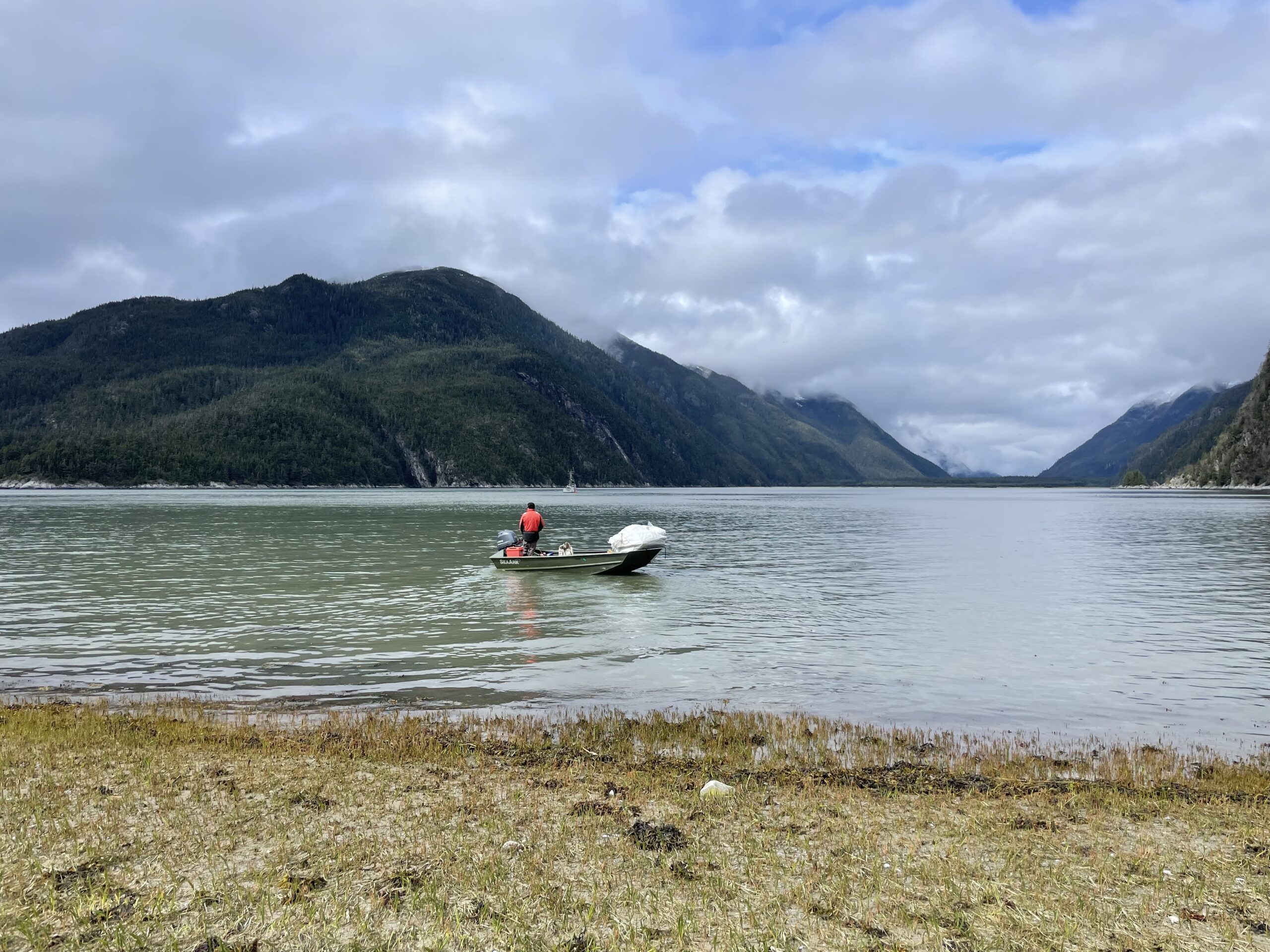
Samples collected this month show that high levels of harmful toxins that cause paralytic shellfish poisoning are again present in the waters around Southeast Alaska. That includes Haines, for the third year in a row.
Read more Alaska Supreme Court denies emergency petition to force officials to open Fairbanks charter school
The Chilkoot Indian Association collects the samples as part of a broader effort by more than a dozen tribes across the region to track paralytic shellfish toxins and warn local harvesters when needed.
Finding dangerous levels of the toxins at this time of year “tracks with what we’ve seen across the years of this study,” said Liam Wirak Cassidy, who does the local sampling. “This year, they’ve been seeing high paralytic shellfish toxin numbers all across the region.”
Harmful algal blooms, including one that happened recently, produce large amounts of biotoxin-producing algae. Shellfish, such as clams, mussels and oysters, eat that algae, which then accumulates in their systems.
The toxins don’t harm the shellfish, but they can be dangerous and even fatal for wildlife and humans higher up the food chain.
Last summer, scientists linked the deaths of 10 fur seals on St. Paul island to the same toxins that cause paralytic shellfish poisoning.
Read more Alaska charities can now host snowfall betting pools
And experts say toxic algal blooms are set to become less predictable and more widespread with climate change.
More than a dozen tribes around the state take samples, which are then tested in a lab run by the Sitka Tribe of Alaska. Right now in Haines, there are active advisories for all shellfish species in Viking Cove, Portage Cove and Taiyasanka Harbor.
A blue mussel sample taken from Viking Cove was particularly notable, with toxin levels measuring nine times the federal limit. Wirak Cassidy said that’s one of the higher readings ever taken in the area.
“If you know you’re someone who harvests mussels or clams or shellfish, now is not a good time to do it,” he said. “The other thing to be aware of is that, if you’re harvesting crabs, to make sure you’re not eating the guts.”
The Southeast Alaska Tribal Ocean Research Network also has active advisories for Nahku Beach in Skagway, Klawock, Juneau, Kasaan, and Ketchikan, according to a June 20 report.
Read more With Murkowski’s help, Senate votes to restrain Trump’s power to wage war on Iran