
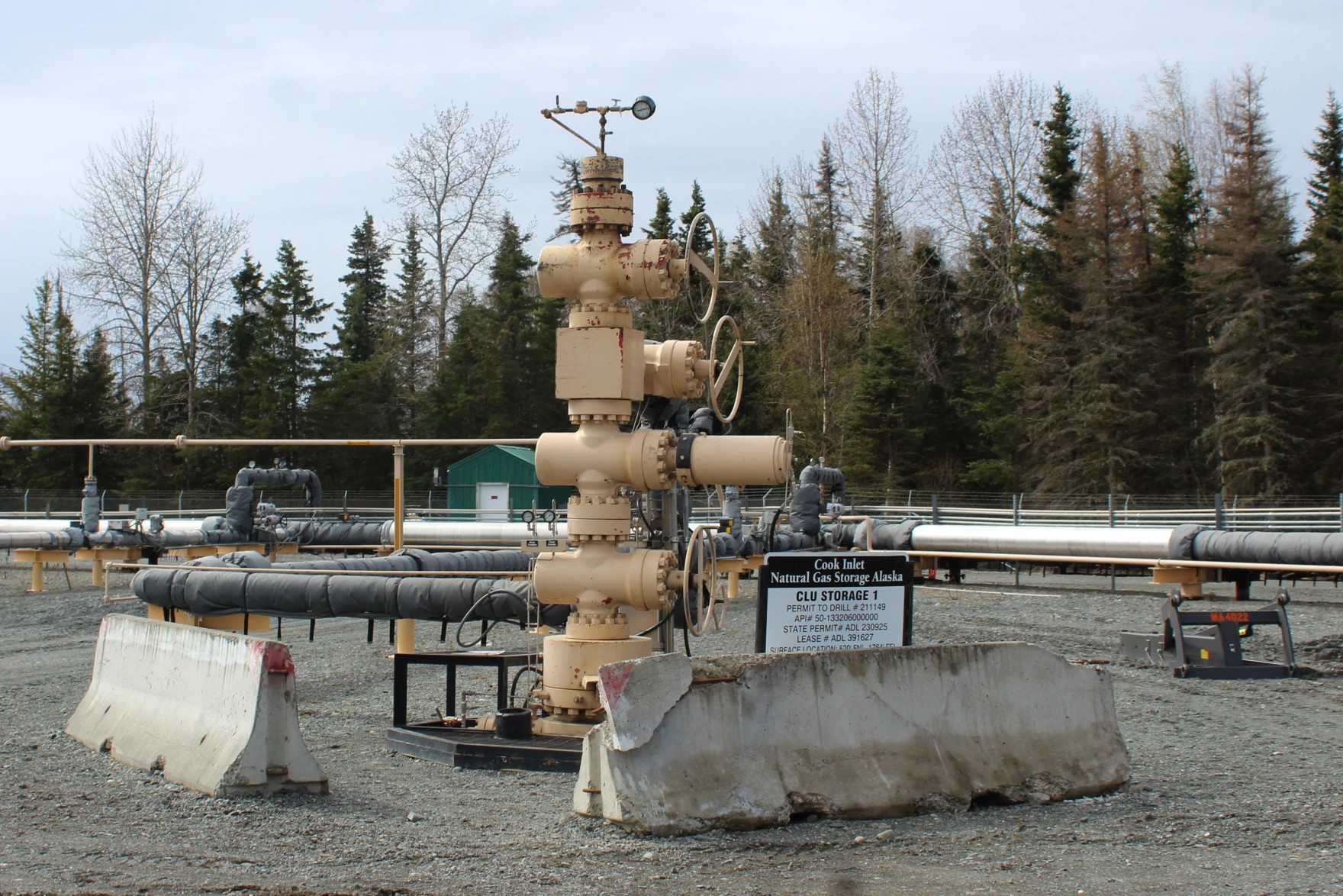
Southcentral Alaska residents will likely see costlier home heating bills for the next few winters, as the region’s primary gas utility, Enstar, says nearby Cook Inlet has become a less reliable source of gas.
Read more Anchorage police pair with recovery peers to get people off the street and into treatment
“We are going to have a problem with deliverability from gas supply out of the Cook Inlet for the next couple years,” Enstar President and CEO John Sims said at a press conference Tuesday at Anchorage City Hall.
The rates consumers pay for gas – and how available gas will be – will largely be determined by how cold it gets this winter, Sims said.
“If we have a winter like we did last year, we are going to have significant challenges and likely see rolling blackouts,” he said.
There is little interest from energy companies to expand production in Cook Inlet, and Enstar has already had to turn away new, large-scale customers to focus on supplying existing ratepayers, Sims said.
The utility is working on a plan to import liquefied natural gas – which is measured in thousands of cubic feet, or MCF – but that’s much more expensive, Sims said.
“Right now, LNG import prices are right around $22 per MCF,” he said. “What we’re paying today is $10.80. So that is not an economically sustainable way to move forward as a state.”
Read more As winter approaches, Southcentral Alaska utilities are worried about running short of gas
Anchorage Mayor Suzanne LaFrance said the impact from high energy costs won’t just be felt by households.
“For local businesses, higher energy costs squeeze profits and threaten jobs,” LaFrance said. “And for the municipality, higher energy bills strain our operating costs, putting pressure on our budget, which impacts municipal service delivery and our taxpayers.”
Sims, LaFrance and other local stakeholders say they’re pushing the Alaska Legislature to finalize a plan to kick off construction of the Alaska LNG pipeline project to help offset the dwindling gas supply.
The pipeline would take years to complete, but it’s important to get it started as soon as possible, Sims said.
“I’m not sure there’s anything the Legislature can do this year,” he said. “What the Legislature can do is try to expedite the long-term solution so that it’s here as quickly as possible, so that we’re not constantly dealing with this.”
State lawmakers were called back to Juneau this week for a third special session aimed at addressing tax break proposals for the gasline project. Only a handful of legislators had returned to the Capitol as of Monday, while they waited for a new bill from Gov. Mike Dunleavy to consider.
Read more Dozens of weather stations crucial for Alaska aviation went dark on Monday