
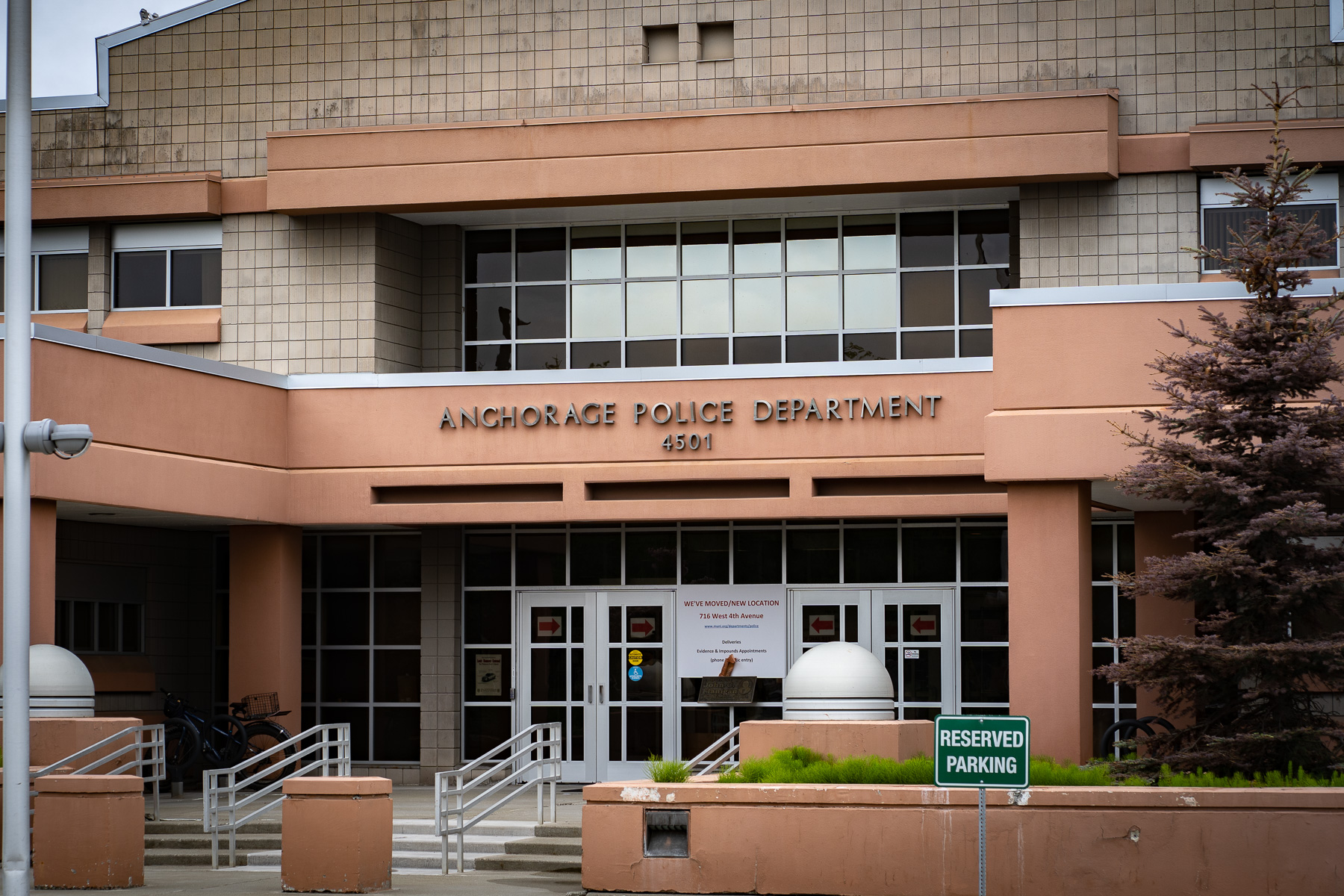
Anchorage police are getting a major upgrade to their surveillance capabilities. The Assembly voted Tuesday to spend just under $600,000 expanding the police department’s real-time crime center, which will give officers centralized access to hundreds of cameras across the city.
Read more Alaska Judicial Council takes rare step of recommending ‘no’ votes on 2 judges
The 8-4 vote followed nearly an hour of debate, with some Assembly members saying the police needed the upgrades to address crime while others argued for stronger privacy protections.
“There’s just so many red flags around this,” said South Anchorage Assembly member Keith McCormick.
Anchorage Police Chief Sean Case said the department’s current setup is inadequate. The center is housed at the department’s Elmore Road building in what Case described as a small concrete box.
“Which means sometimes you can’t get cell service out of it,” he said. “This equipment that we’re talking about today is to move it in a location that is going to be able to house enough desks to put all our workers that are going to be in the real-time crime center, computers and that sort of technology.”
At full capacity, officials say the real time crime center would have the ability to access up to 750 different cameras across the city, from police body cameras and drones, to traffic cameras, license plate readers and private security cameras that members of the public give the police permission to use. Officers would not be able to access the hundreds of cameras all at once, Case said.
“We can’t pipe that many camera feeds into the real-time crime center for a whole host of reasons,” he said.
The Assembly had delayed a vote on the funding last month, something that Eagle River Assembly member Jared Goecker took issue with. He cited a from the state Department of Public Safety that showed Anchorage crime was on the rise last year, with property crime up 20%.
“Delaying resources for law enforcement while crime is surging is completely backwards and unacceptable,” Goecker said.
But some members, like McCormick, expressed concern that many of the policies that govern the crime center are internal to APD, and subject to the chief’s discretion.
“We’re talking about expanding resources for an asset that we had the chief say he can change the policy on tomorrow, and they just update on the website, and you can find it if you know about it,” he said.
Read more Haines fisherman say the salmon runs aren’t great this year, but the prices are
McCormick, Assembly Vice Chair Daniel Volland and North Anchorage member Sydney Scout have proposed an ordinance that would codify policies and procedures for the access and storage of information captured by the new surveillance upgrade. Many of the code changes match internal police department policies.
Volland said he’s heard many questions from members of the public as to how footage could be used.
“We don’t have clear guidelines in code for who can access that data,” he said. “Can it be sold to third parties? When does it have to be deleted? How is it securely stored?”
The three members wanted to approve the code changes voting to move forward with the project. But some members, like West Anchorage’s Kameron Perez-Verdia, said the center is already operating, and questioned delaying the expansion.
“Holding back funding for audiovisual equipment for a center that’s already functioning, already working, already processing the information it needs to process, it doesn’t make any sense to me,” Perez-Verdia said.
The Assembly ultimately voted 8 to 4 to approve the crime center funding, with East Anchorage’s George Martinez joining Scout, McCormick and Volland in opposition. It will take months to fully upgrade the center, Case said.
Mayor Suzanne LaFrance said she’s in favor of updating the city’s privacy laws to account for the police upgrade. But she told Assembly members Tuesday that she has concerns over the current code change ordinance being proposed.
“The AO before you would unduly limit some core functions of APD operations, including misdemeanor enforcement and joint operations with state and federal partners on illicit drug enforcement,” she said.
There are also broad definitions in the ordinance that could impact everything from city staff using iPhones to broadcasting Assembly meetings, LaFrance said..
Volland said he and his co-sponsors plan on working with the mayor’s administration on fine tuning the ordinance, before bringing it back before the Assembly on Sept. 15.